- Savage Blog
- Effective Tactics for Spring Bear Hunting
Effective Tactics for Spring Bear Hunting

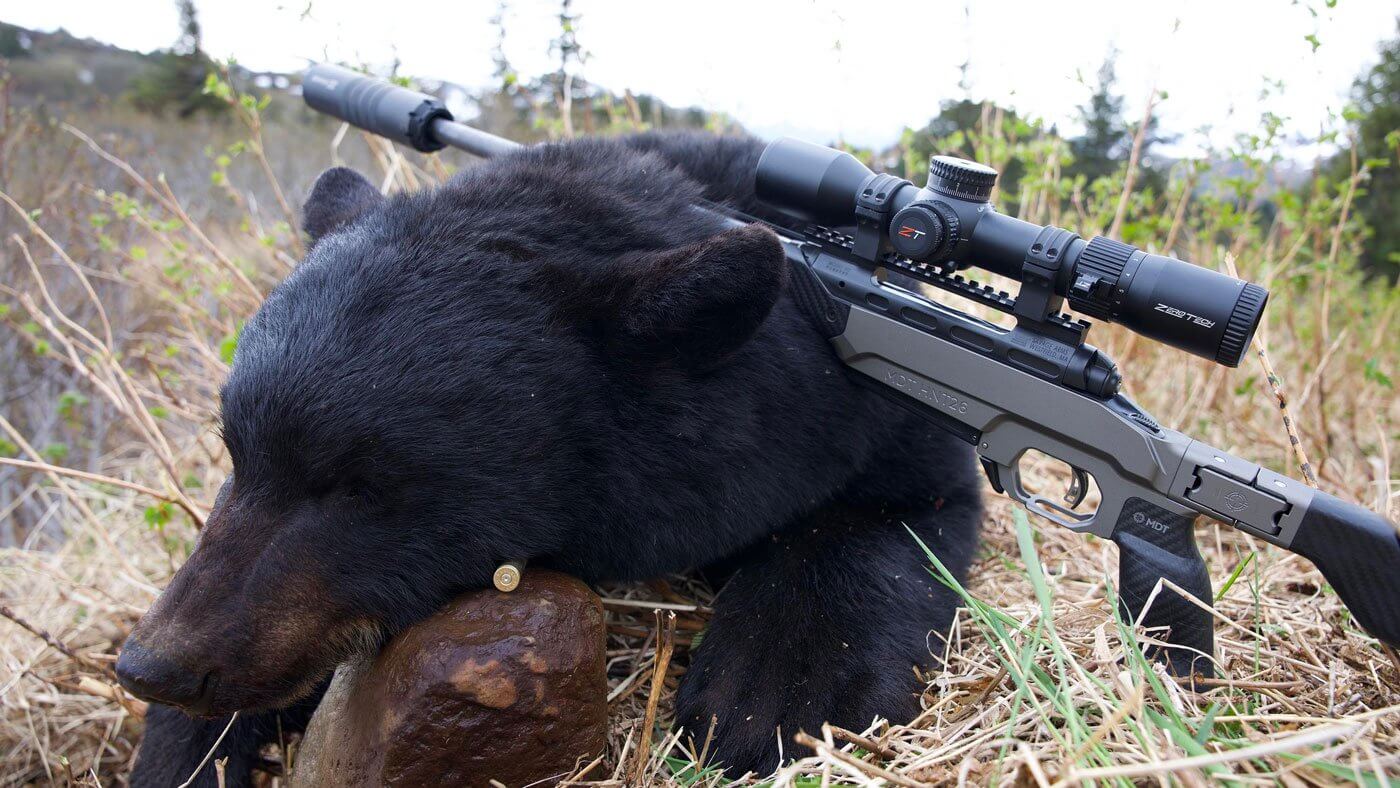
Spring bear hunting offers one of the most exciting hunting opportunities of the year, but stepping into the woods unprepared is a quick way to come home empty-handed. Bears are intelligent and elusive, meaning you need to have a strategic game plan to have success in the field. Strategies vary by state and area, with some hunters preferring to sit on bait piles and others glassing ridges and stalking bruins along the mountainside. Understanding bear behavior, habitat, and the best rifle for the job will often help you find more success. Let's break down spring bear behavior and habitat, two primary hunting strategies, caliber selection, and different Savage rifles that are well suited to the job.
Spring Bear Behavior
To successfully harvest any game animal, you need to gain an understanding of their behavior. Spring bear hunting requires careful study of bear behavior to be successful. Bears leave their dens anywhere from March to June, varying widely based on weather conditions and elevation. The lower the elevation a bear is denning, the sooner they will typically emerge. As bears emerge from hibernation, their main focus is putting on weight. Bears are omnivores, eating anything from berries to fish to animal carcasses. Wherever you can find plentiful food supplies, you will often find bears not too far away.
During the first few weeks after waking up, bears are out in the open throughout the morning hours and reemerge in the evening, which are the best times to pursue them. Most spring bear seasons end in May, catching the very beginning of mating season. You can use this brief overlap to chase late season boars focused on mating, where they expand their range greatly and can wander into areas they hadn’t previously occupied.
Spring Bear Habitat
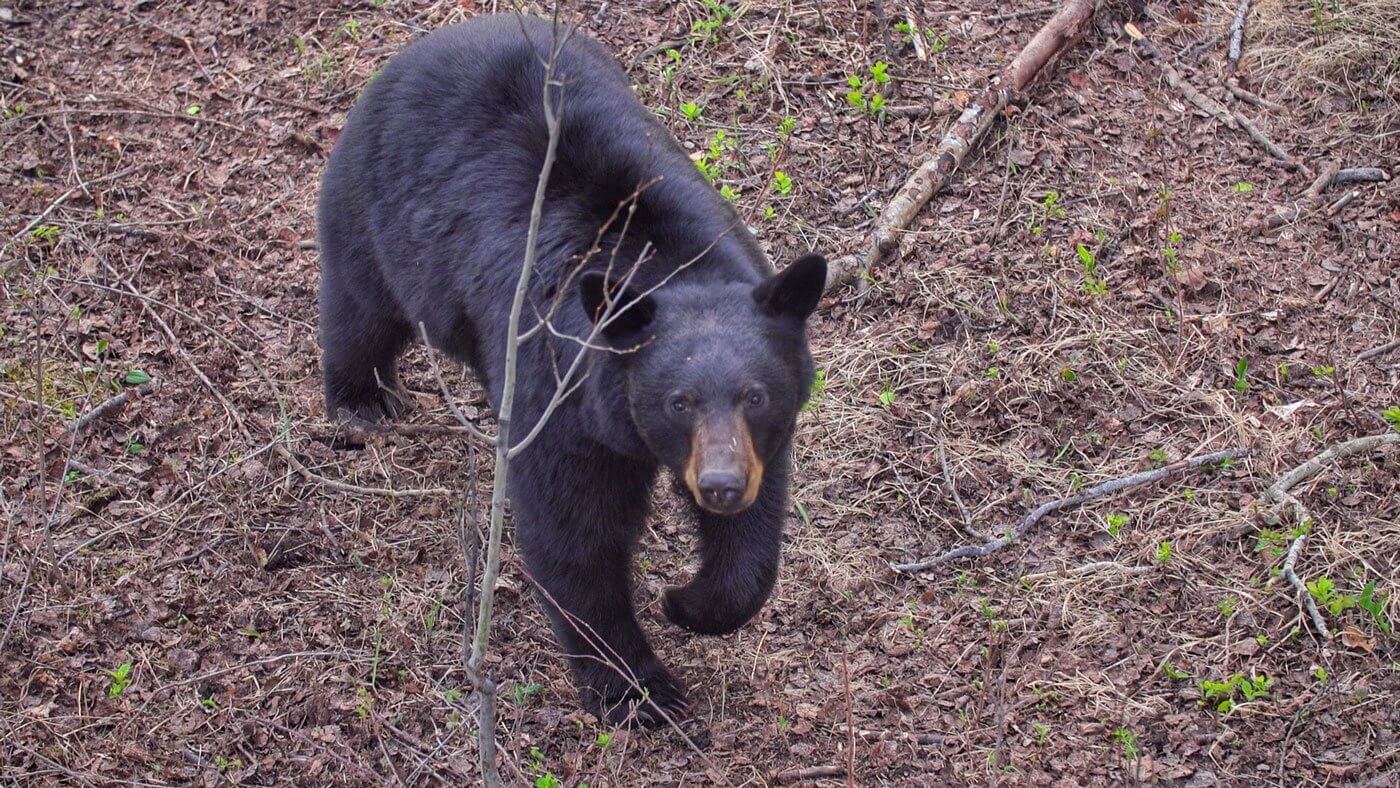
Bears are omnivores, with plants making up most of their diet. As they emerge from hibernation, they follow the spring green-up looking for young plants and ripe berries, often following the same pattern as other big game animals like elk and deer. They will opportunistically eat meat as well, but finding new greenery and ripe berries will often lead to bears. Here are some other spots to focus on for your spring bear hunting.
- South-facing slopes: The easiest and most accessible foods for bears emerging from their dens are found on south facing slopes that get the most sunlight. On these slopes you’ll find new blossoms, flowers, berries, tree buds, bugs, and grubs.
- Logging roads and clear-cuts: You like an easy to walk path, and so do bears! As the season progresses, bears will use these areas more to travel and find new vegetation along their paths.
- Riparian areas: Waterways are naturally desirable for bears. They provide fresh water, easy access to food, and are a natural draw for deer and elk that occasionally perish in these areas, providing more food for bears as they emerge from hibernation.
A black bear against a green hillside can be easy to spot even from a mile or so away. Carrying binoculars and spotting scopes dramatically increase your odds of finding a bear as you’re scouting in different habitat areas.

Hunting Strategy #1: Bait Sites
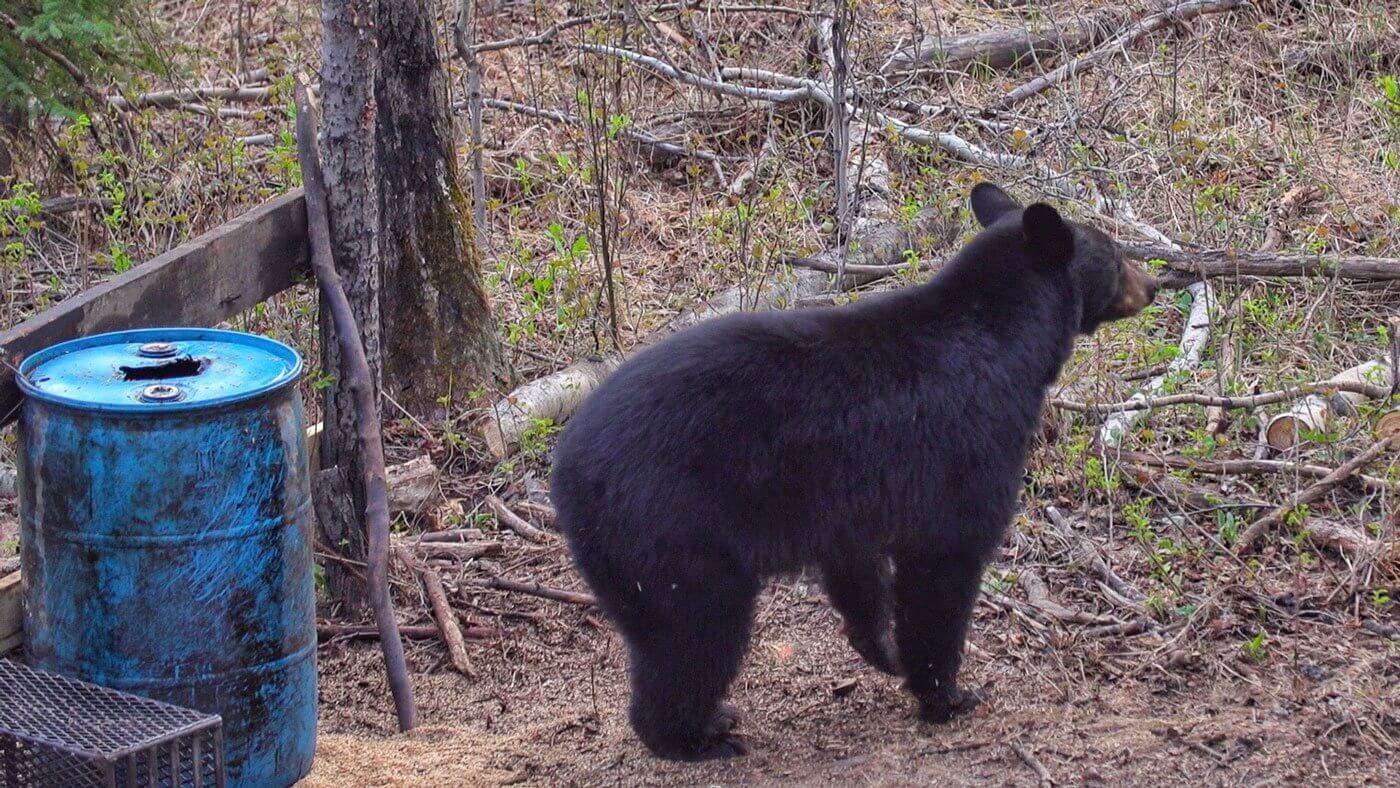
Baiting is one of the most popular spring bear hunting strategies. It involves placing a bait pile in a desirable area, then hunting from a stand or blind positioned nearby. The legality of baiting varies depending on where you are hunting, so it is always best to check your local regulations.
Choosing the right location
- Don't just place bait sites randomly; pick your areas with a purpose. Target areas where bears naturally roam in the spring to find food, such as waterways, clearings, meadows, and logging roads.
- Look for signs of bear activity such as tracks, scat, and claw marks on trees. Bears will approach food sources from areas where they can stay hidden. Place bait sites in areas surrounded by heavy cover, giving the bears comfort and security in approaching the site.
- Wind and thermals matter. Bears have an excellent sense of smell and will use it to key in on your bait sites. Place them in areas where the wind will carry the scent naturally and attract bears from farther out than just the immediate area.
Setting up the site
- Start baiting early, at least 2-4 weeks before the season opens, to give bears a chance to find your site, get comfortable with it, and start approaching during the daylight hours.
- Use high-calorie baits to appeal to bears that are seeking high-calorie food sources. Cooking oils and sugary foods like doughnuts and other pastries are popular choices as their sweet smell appeals to bears.
- Visit the site consistently during the pre-season to replenish bait, usually every 2 to 3 days. If bait is not available consistently, then bears will not check the site consistently, leading to a stand that is unreliable when the season comes in.
Hunting the bait
- Hunting bait is a close quarters affair, often occurring within 50 yards. This gives you a wide range of choices when it comes to the rifles you are using, allowing anything from moderate power cartridges to rifles with iron sights and low power scopes.
- Get out to the field for early morning and late evening sits when bears are most active. Make sure to study a bear carefully before each shot, especially to verify it is not a sow with cubs. Most states have restrictions on bears that can be shot, so verify your target carefully before pulling the trigger.
Hunting Strategy #2: Spot and Stalk
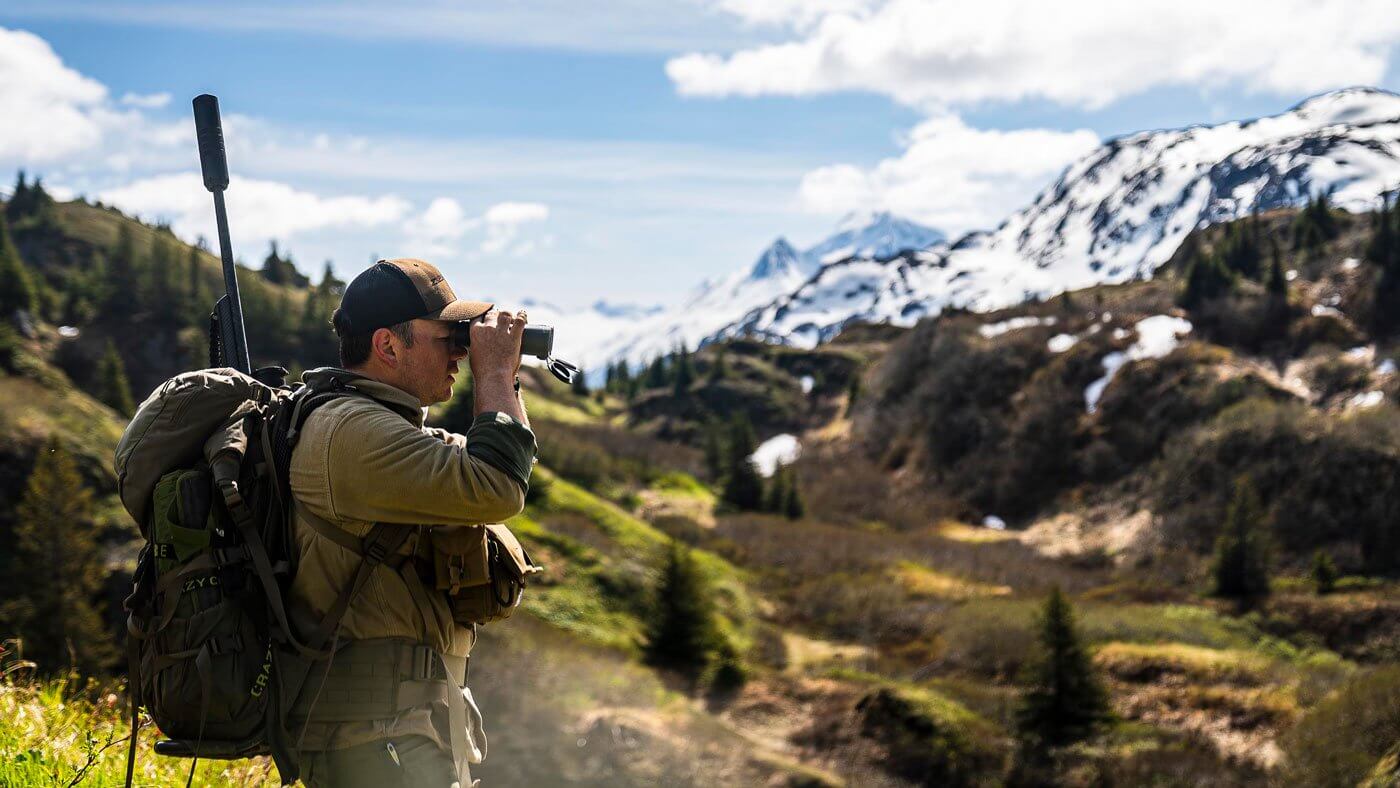
Spot-and-stalk hunting involves glassing large areas of terrain from a vantage point, identifying a target bear, then closing the distance for a shot. It is the most common method of spring bear hunting in western states where large tracts of land and wide-open spaces can leave lots of space between bears. Spot and stalk hunting requires more physical effort and woodsmanship but can help you bag a true giant in the field.
How to glass effectively
- Glassing will take up the majority of your time when you’re spring bear hunting. Your best bet is to continue covering ground and glassing open areas, often during the prime hours in the morning and the evening.
- The most important part of spot and stalk bear hunting, especially in the mountains, is finding the right elevation. Find out where bears are starting to emerge, find their food sources, and then the hunt is on.
- Focus on glassing open side hills, south-facing slopes, logging roads, and recent burns, all of which are areas where bears are easily visible while feeding.
Making the stalk
- Move slowly and deliberately once you’re in range of bears. Scan for sign like scratch marks, shrubs and berries that have been eaten, and bear scat. When you find heavy sign, slow down and pay close attention. Bears are likely nearby.
- A bear actively feeding in one area is a great opportunity. If you spot a bear that’s actively feeding, they will often take their time and carefully work over a food source. This gives you time to get closer, get setup, and take that perfect shot.
- Just as in deer hunting, wind awareness is critical. Bears have an excellent sense of smell, so always approach downwind to prevent the bear from detecting your scent before you can get into position.
Rifle Picks for Bear Hunting
Rifle options are endless for spring bear hunting, and we have several strong contenders. Here are four strong options from the Model 110 and Impulse families that can help you bag your next bruin.
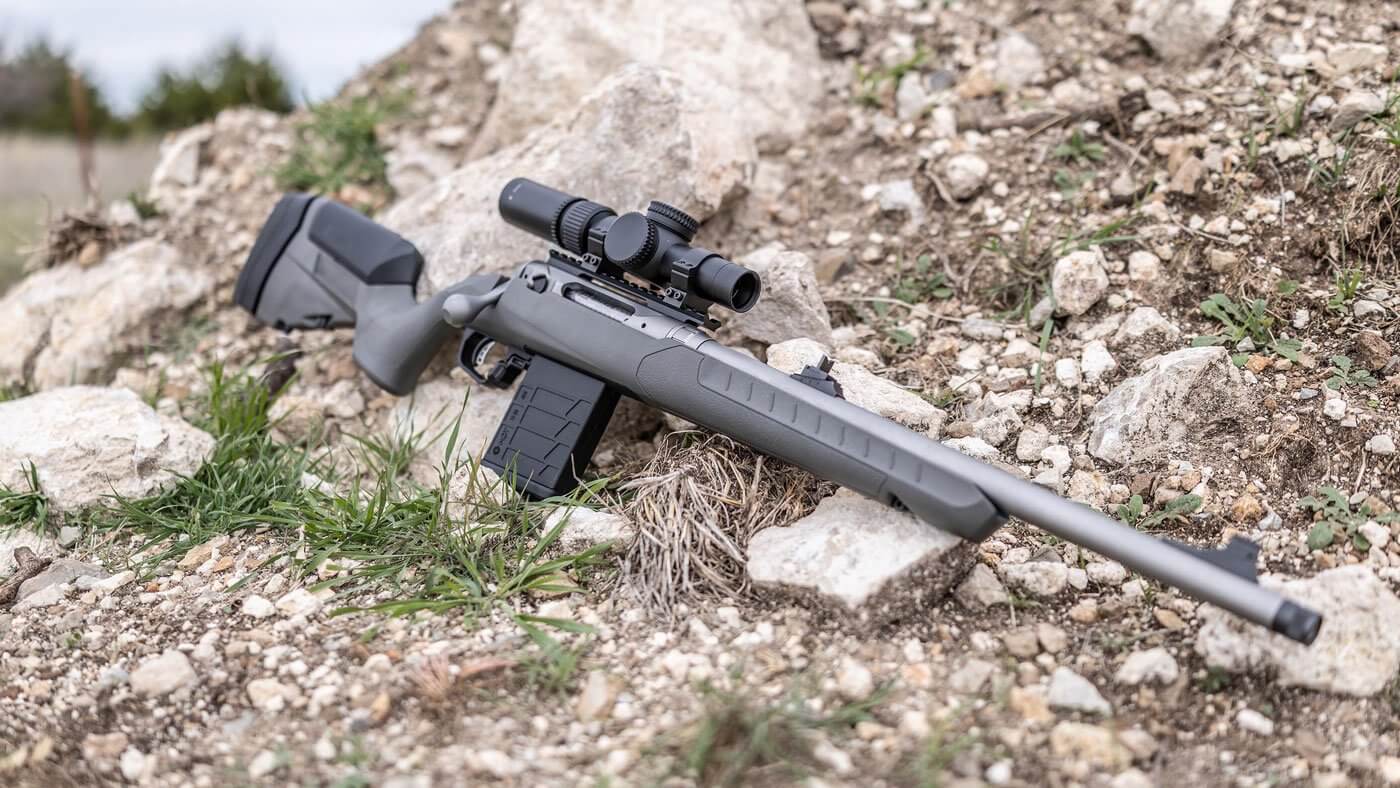
- 110 Ridge Hunter: Built for close range hunts in heavy cover, the 110 Ridge Hunter is an excellent choice for spot and stalks and bait pile sits alike. It features 16.5–20" stainless steel barrels with a medium contour that excel in tight cover, especially in stands near bait sites. Key features include the Trophy Stock with LOP adjustment, an exclusive LimbSaver® recoil pad for 50% recoil reduction, a user-adjustable AccuTrigger, iron sights for fast target acquisition at close range, a threaded barrel, and an AICS detachable box magazine. The Ridge Hunter also comes in heavy hitting calibers like 338 Win Mag and 375 Ruger, making it perfect for taking down the biggest bears.
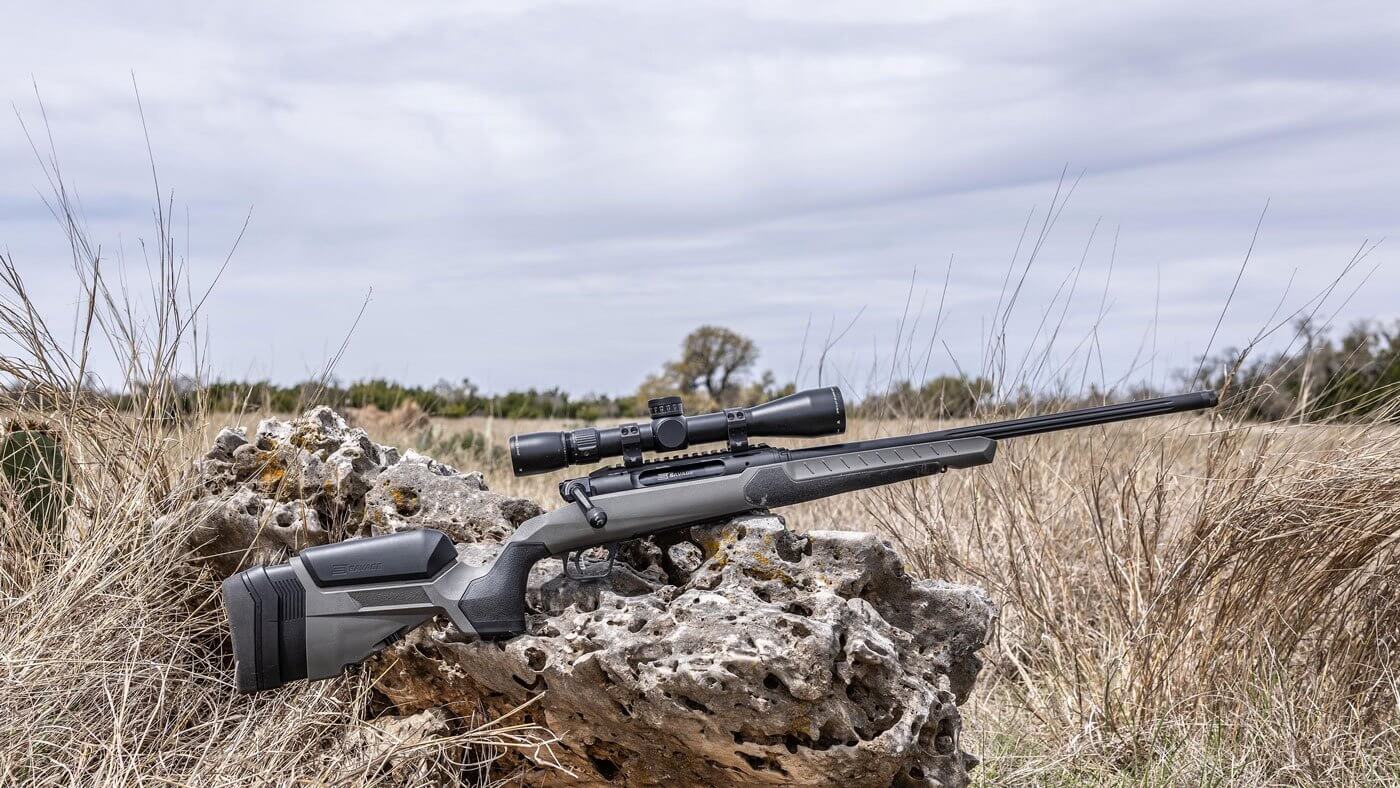
- Impulse Core Hunter: Our straight pull Impulse platform gives you the best chance for fast, accurate follow up shots. The Core Hunter model Features 16.5–24" carbon steel barrels with straight fluting, an AccuFit V2 stock with toolless LOP and comb adjustment, interchangeable grip modules, M-Lok® panels, a Black Ink Cerakote barreled action, a DLC-coated bolt body with threaded handle, and an integrated 20 MOA rail.
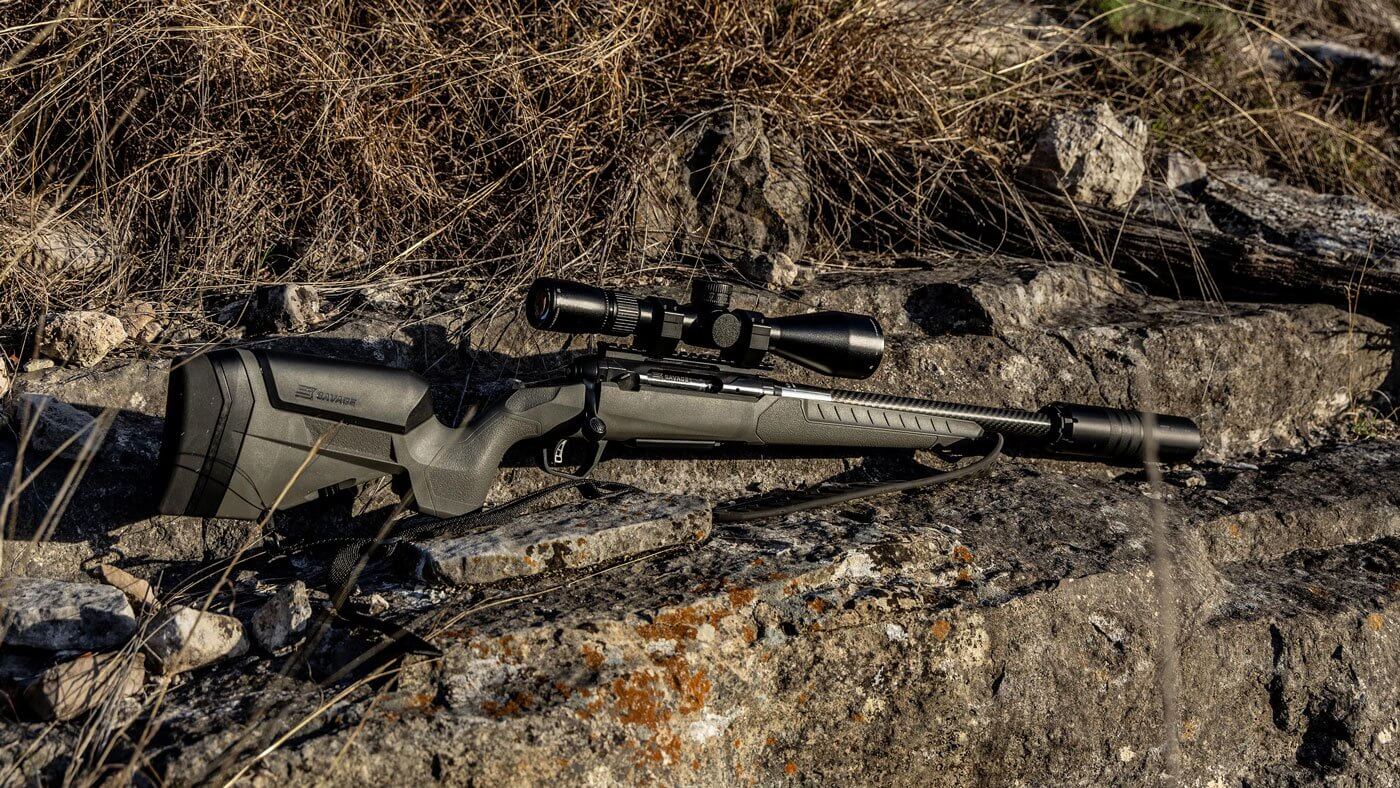
- 110 Carbon Hunter: For hunters who want to cover ground during a spot-and-stalk hunt without the burden of extra weight, the 110 Carbon Hunter is an excellent choice. Featuring 18–20" carbon fiber barrels, a Trophy Stock with LOP adjustment, an exclusive LimbSaver® recoil pad with 50% recoil reduction, a Blackout Cerakote action, jeweled bolt body, user-adjustable AccuTrigger, threaded barrel, and a one-piece 0 MOA rail. Available in multiple hard-hitting calibers including 300 Win Mag, 7mm PRC, and 6.5 PRC for taking down bears while keeping weight light.
Spring bear hunting can make for some of the most exciting hunting of the year. Whether you’re baiting or going on a spot and stalk hunt, trying to tag a mature bear is an exhilarating challenge. Remember to be patient, find the food sources, glass open areas to find bears, and close in to get in the perfect spot to set up for success. If you’re looking for a new bear rifle, the Model 110 and Impulse lines offer plenty of heavy hitting rifles that will get the job done quickly and efficiently. Spring bear hunting is a challenge, but it’s a challenge that’s rewarded by an exciting hunt unlike any other.