- Savage Blog
- Spring Shed Hunting: Tips for Finding Antlers
Spring Shed Hunting: Tips for Finding Antlers
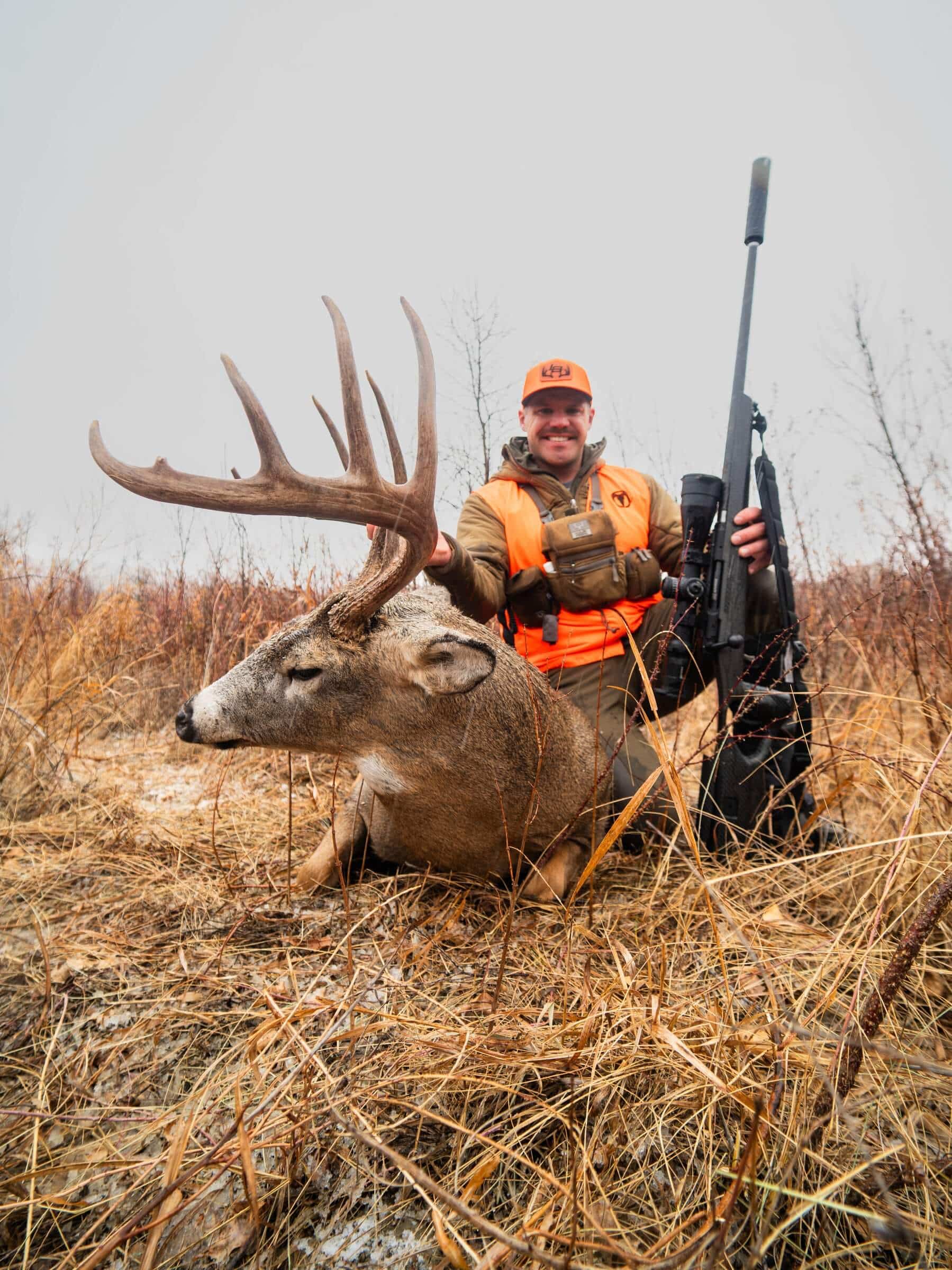
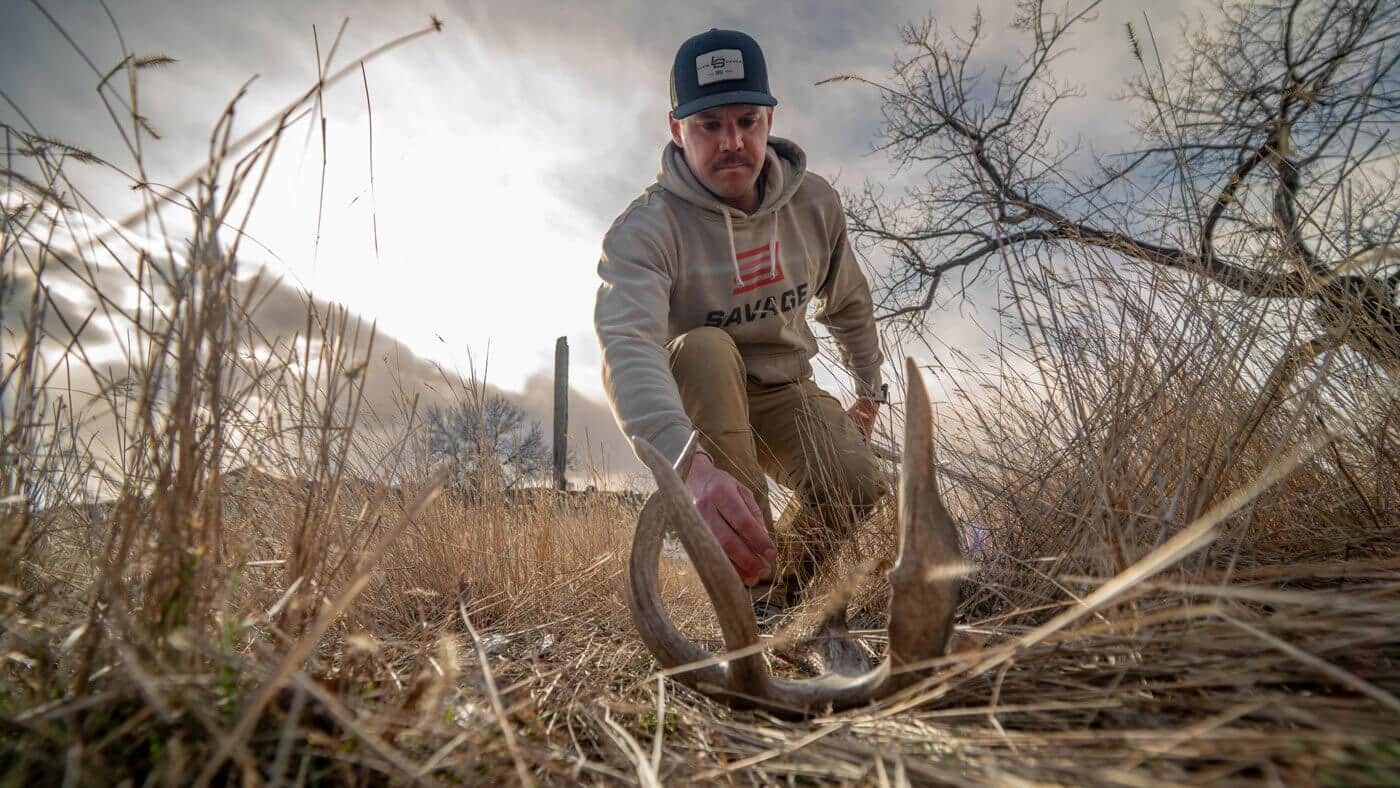
Cabin fever has likely set in for most of us that thrive being outside. However, there is light at the end of the tunnel as we power through March. As the weather warms and melts away the snow, now is the time to get out and walk some of your favorite woods or explore a mountain side. If you are paying close enough attention to the ground, you’ll likely stumble across a shed antler. Chances are you’ll find more and will have yourself a new springtime hobby. We wanted to share some of our insights on shed hunting that we’ve gathered over the years exploring many different states.
Get the Timing Right
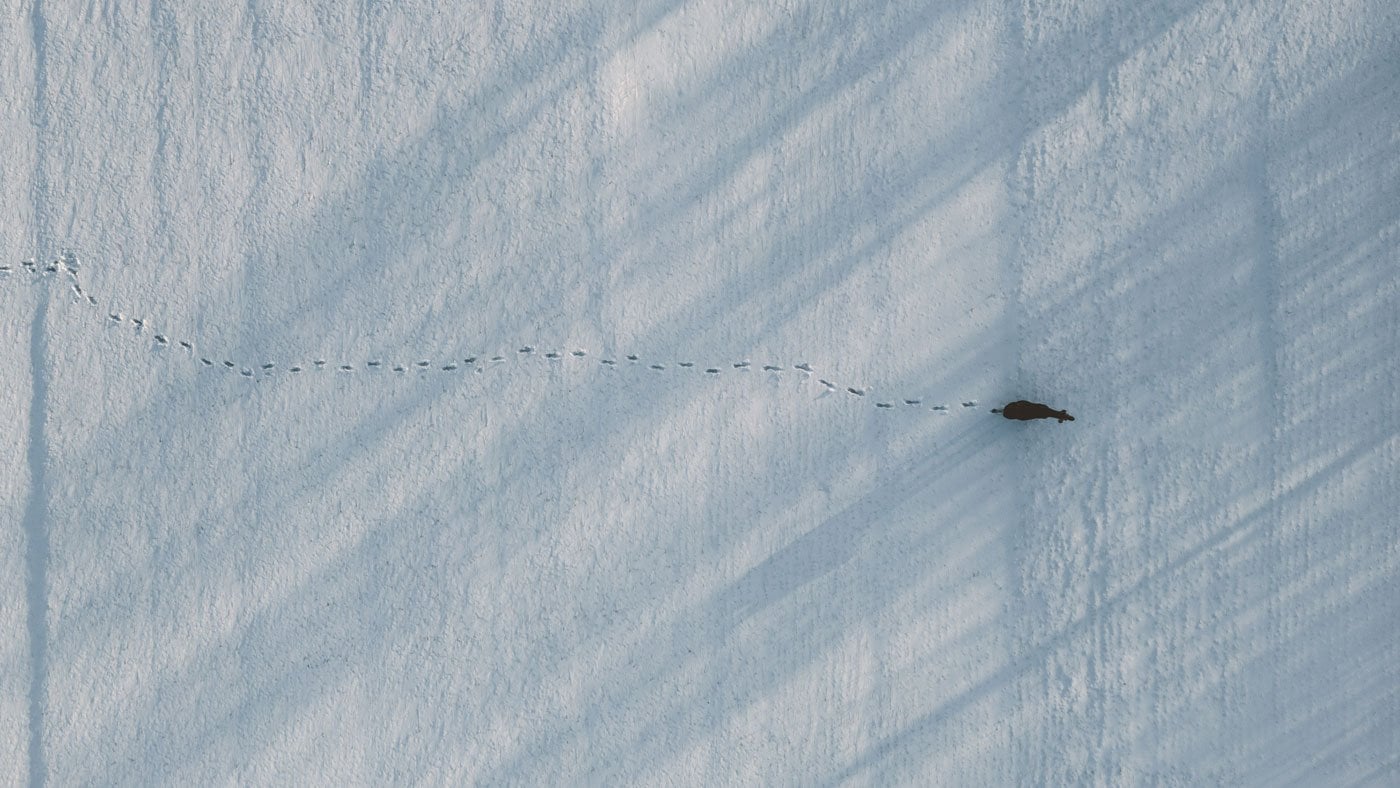
Timing is everything. You need to spend most of your time shed hunting looking for sheds where the animals (deer, elk, moose) winter and/or the areas they are currently using during this time of year. If you start looking for sheds too early (before they shed their antlers) you’ll likely be looking for something that isn’t there. We have also found a ton of sign of ungulates in certain areas that, to us, seem like a perfect spot for them to live, but in fact, is a place where they might rut during the fall, then vacate come December. A tactic we like to use for narrowing down areas to look for sheds, is glassing. Spend some time early in the mornings looking over areas where you think they might be living in March/April. These areas should include access to food, sunlight during the day and some sort of bedding cover. Take advantage of a fresh snowfall. Tracks will stay visible long after they disappear into a bedding area. You should be able to lock down their location based on tracks alone. Also pay attention to males still holding antlers.
Find the Food
Finding a reliable and abundant food source is vital for animals to survive the winter months. This makes for a great area to focus on while you're shed hunting. Food sources are easier to identify in the Midwest, cornfields being the most obvious. But as you move out west, you’ll have to do a little more research to find what they are eating on. For us, we’ve found most of our elk and mule deer sheds in the wide-open grasslands or hilltops where the wind has exposed grasses for them to eat. We’ve spent many hours searching the thick cover thinking that looked like the best area for them to drop their antlers. However, year after year, that thought has been proven wrong. We now tend to cruise ridge tops and grid search open flats searching for fresh sign from elk and mule deer to hone in our search area.
As you move even further west, into the mountains, wintering grounds might be a little more obvious with bigger herds of animals. As the snow line retreats to higher elevation, so will the elk and deer. They will follow the snowline that has now exposed more food for them. Let’s move further south; elk and deer are likely to be found in the lower desert areas focusing on woody browse like mountain mahogany, sagebrush, willow and other shrubs. Water will likely be more of a key factor down here, as it’s scarcer than the food. Focusing on their travel routes to and from water could be key to your success when shed hunting in the desert.
Go Slow
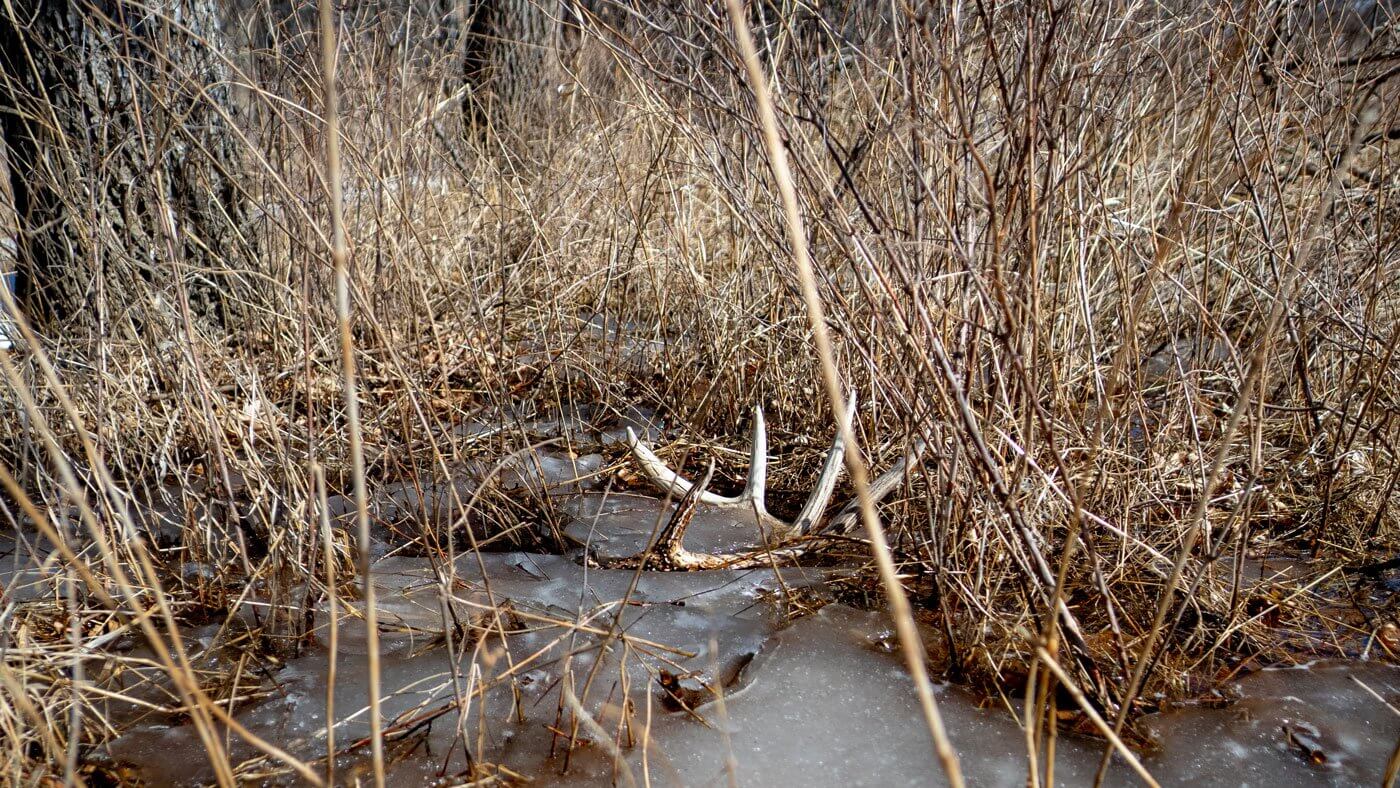
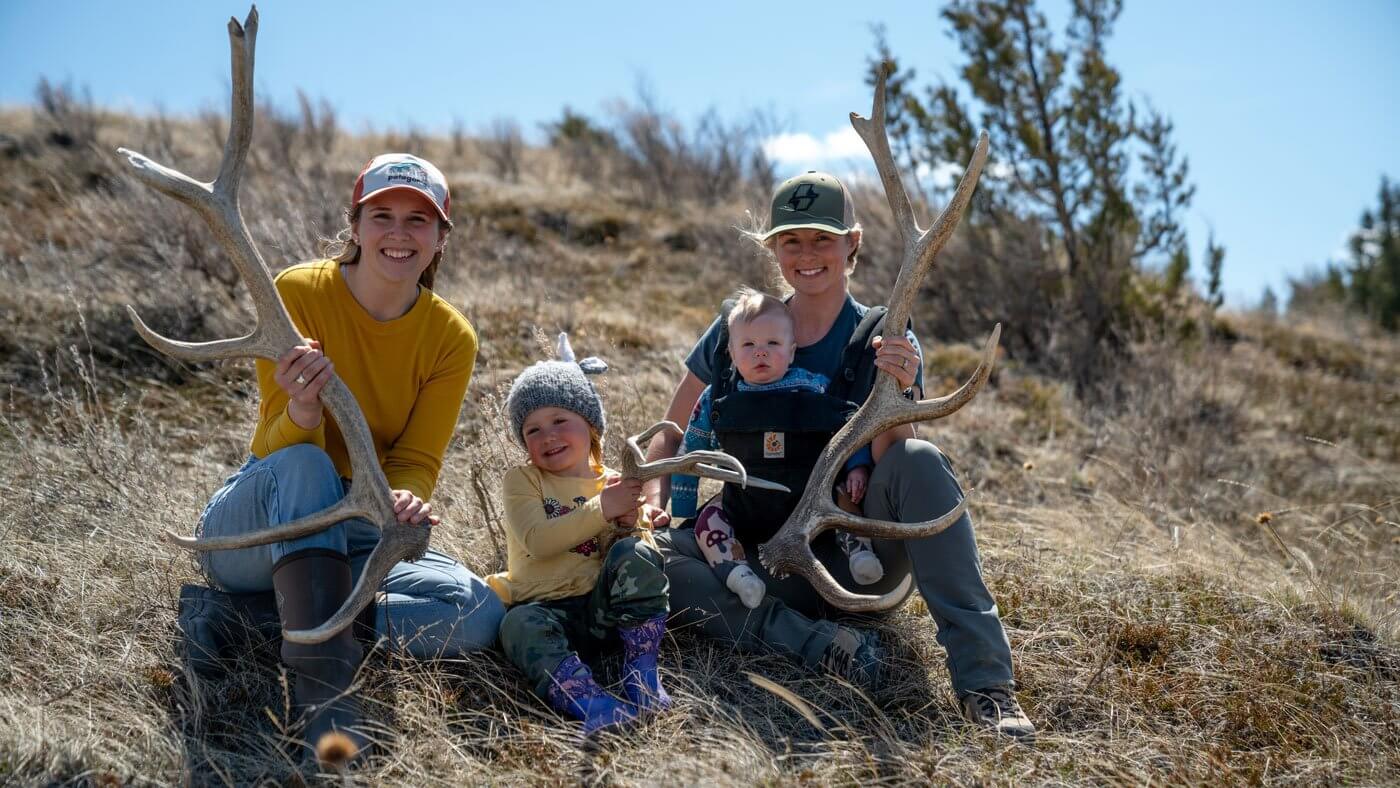
Slow down. If you think you are walking slow enough, walk slower. We often bring our kids shed hunting, and they require a lot more patience during the long walks. However, we’ve had a lot of luck turning up sheds when they are with us, as a slower pace allows for you to really look around and analyze each potential tine or stick that catches your eye. The slower the better is defiantly something we try to stick to, especially in the whitetail woods. Not all deer will walk the main trail, and often we will spot an antler off the beaten path. Cornfields can be highly productive yet very tricky when it comes to laying eyes on sheds. Sifting through thousands of stalks is time consuming. So, if you take a slower pace, the less you will miss. This is where kids come in handy, they are much slower walking through taller grasses and having to climb over logs that us adults can easily step over, resulting in a slower pace.
How About Some Moose?
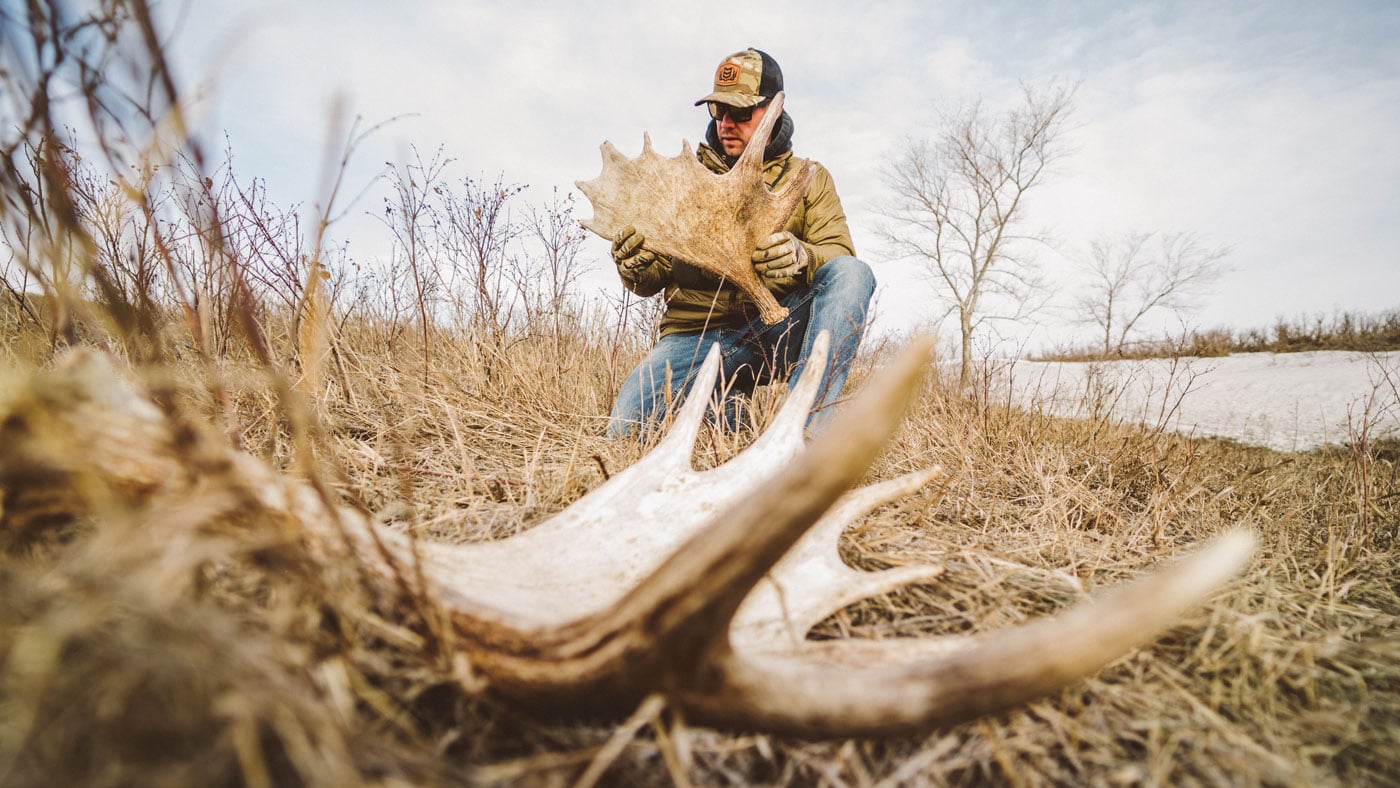
Some of you might be asking, what about the coveted moose antler? Well, to be honest, we haven’t had enough luck turning up a bunch of moose antlers when shed hunting. We’ve found a few over the years in some of the nastiest thickets you can find, often in deep draws filled with snow up over your knees, but that’s where moose can survive unlike many other animals. Their extremely long legs allow them to travers those snow filled draws while browsing and travelling to water. If you’re going to go all in on finding a moose paddle, spend some time glassing river bottoms or some deep draws once the snow flies. Figure out where they settle in for the winter and be patient. Remember, you can’t find what isn’t there. (If they haven’t dropped their antlers yet, you can’t get them).
Sunlight and Shadows
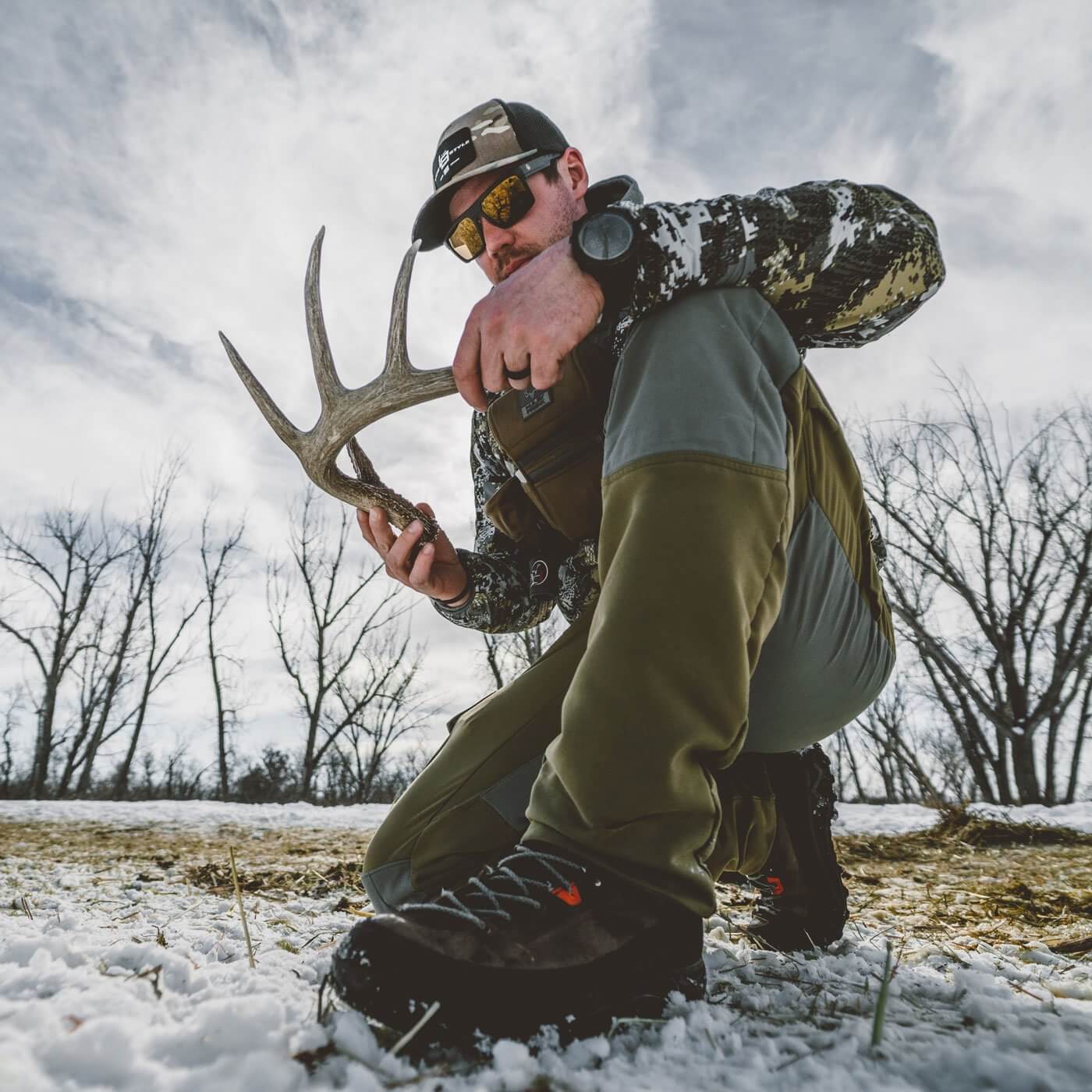
Our last tid-bit of information we’d like to share is taking the sun into consideration when you're shed hunting. The time of year and day can play a major factor in your ability to spot antlers. Shadows can be very straining on the eyes. We’ve had significantly more luck on cloudy days, or later in the spring when the sun is higher overhead. That's when the sun has moved further into the northern hemisphere and there's more time in the day when the sun is directly above you, resulting in shorter shadows on the ground. Our favorite days to walk are when its cloudy, which helps with a more neutral color to the ground and your eyes aren’t fighting shadows. Your eyes will be able to spot the straight lines of tines much easier and the whiteish-yellow will stand out much more.
In conclusion, we're certainly not saying our insight is absolute, but these are a few things we have notice over the years while shed hunting. Timing is everything when it comes to time of year, where the animals are currently at, what they are feeding on, the pace at which you are walking, and the position of the sun. But most importantly, you must be out there to find anything. You must be willing to put in the miles and hours to better your odds. It’s one of the most enjoyable things you can do in the spring to escape the everyday chaos. Also, take notes of the sign you find, you might benefit from the knowledge you gain in the spring come time for hunting seasons September through November. We wish all of you the best of luck this spring, and hope you can take some of this information and better your odds of success this fall.