- Savage Blog
- Turkey Hunting Gear: Getting a Start in the Spring Woods
Turkey Hunting Gear: Getting a Start in the Spring Woods

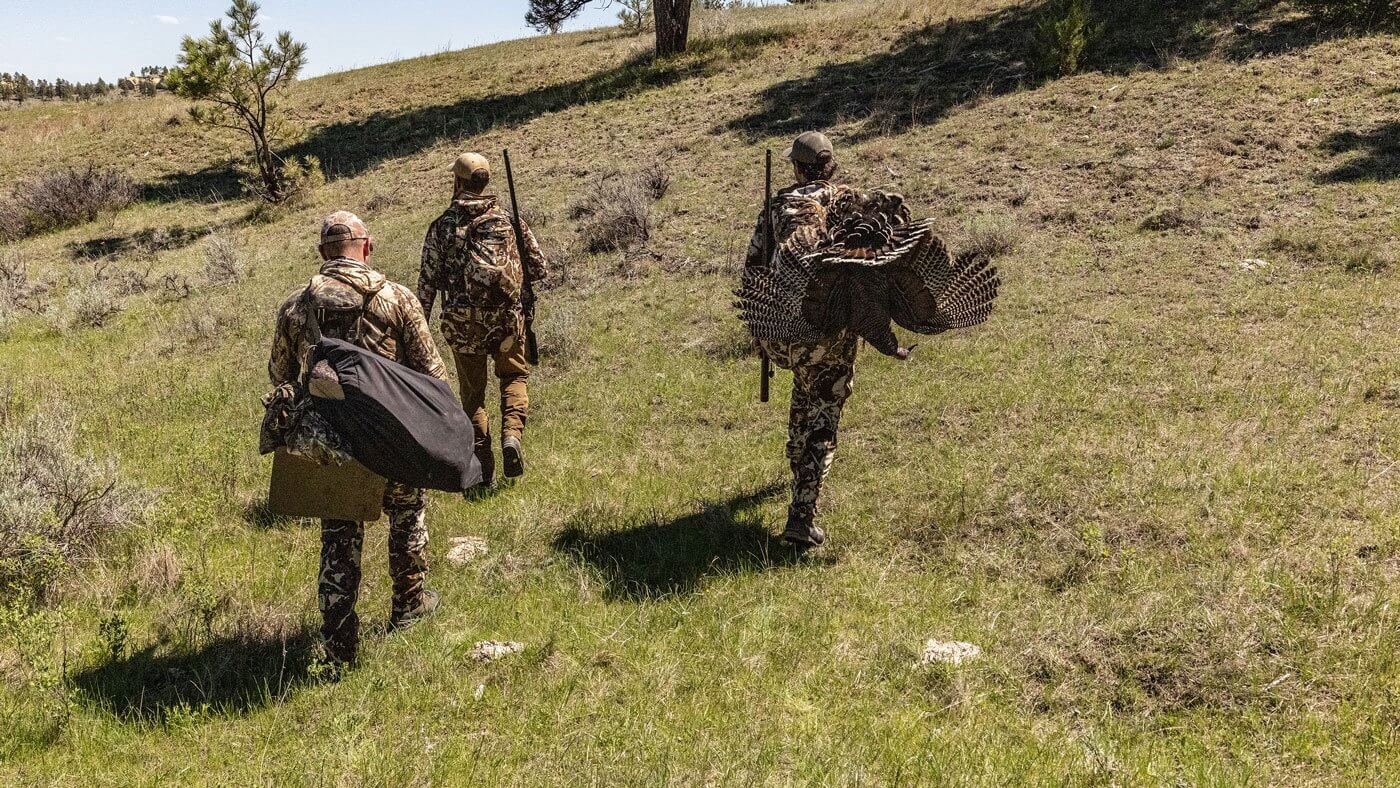
Turkey hunting can often be a thrilling pursuit. Plus, it takes place at a time of the year where few other seasons are open, giving you ample opportunities to pursue these thundering game birds. Like any other hunt, having the right turkey hunting gear can be a crucial difference between bagging a gobbler or going home empty-handed. but showing up unprepared is a quick way to go home empty-handed.
You don’t need the fanciest gear in the woods to harvest a turkey, but having a few key basics is a good start. From camouflage to ground blinds, let’s review some key pieces of gear you’ll want to have before you hit the woods this spring.
Camouflage: Blend in and Disappear
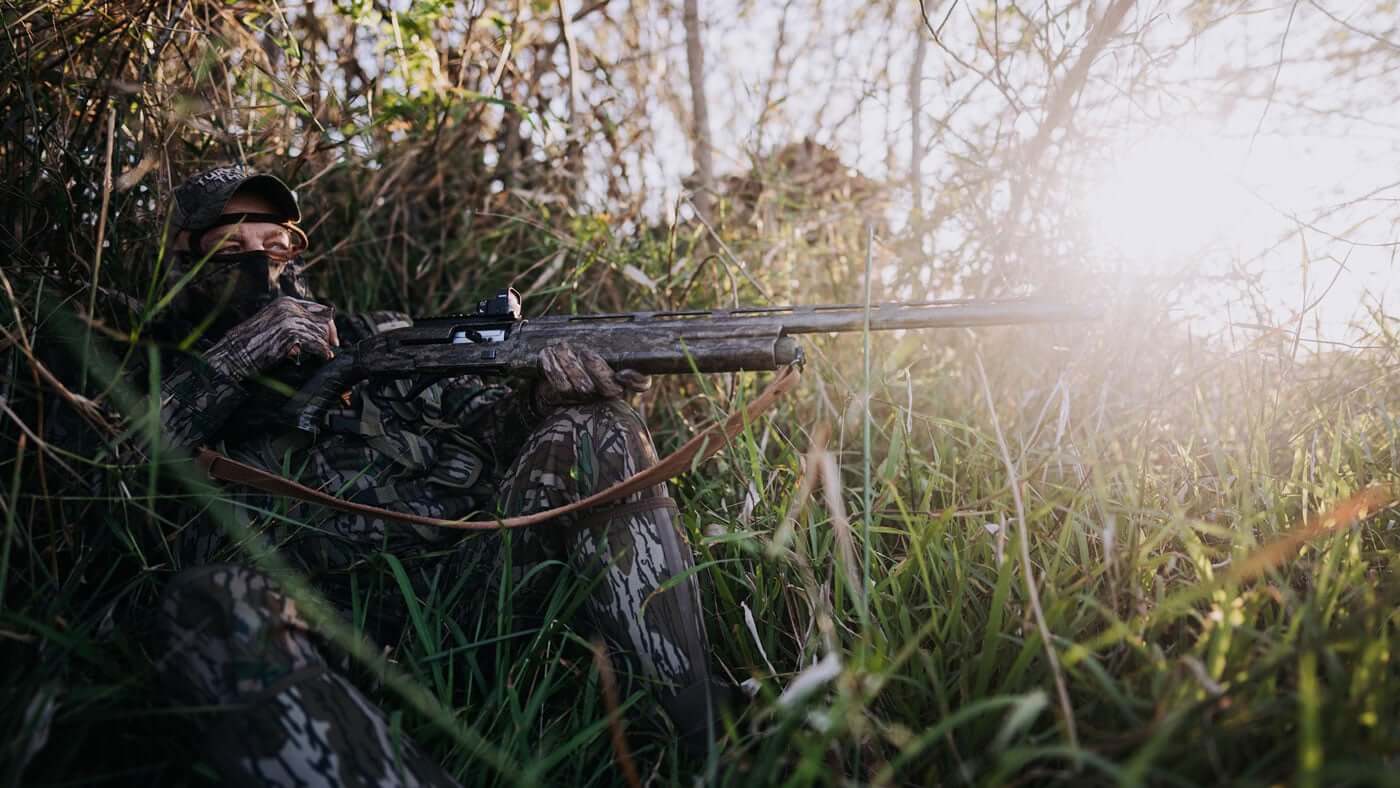
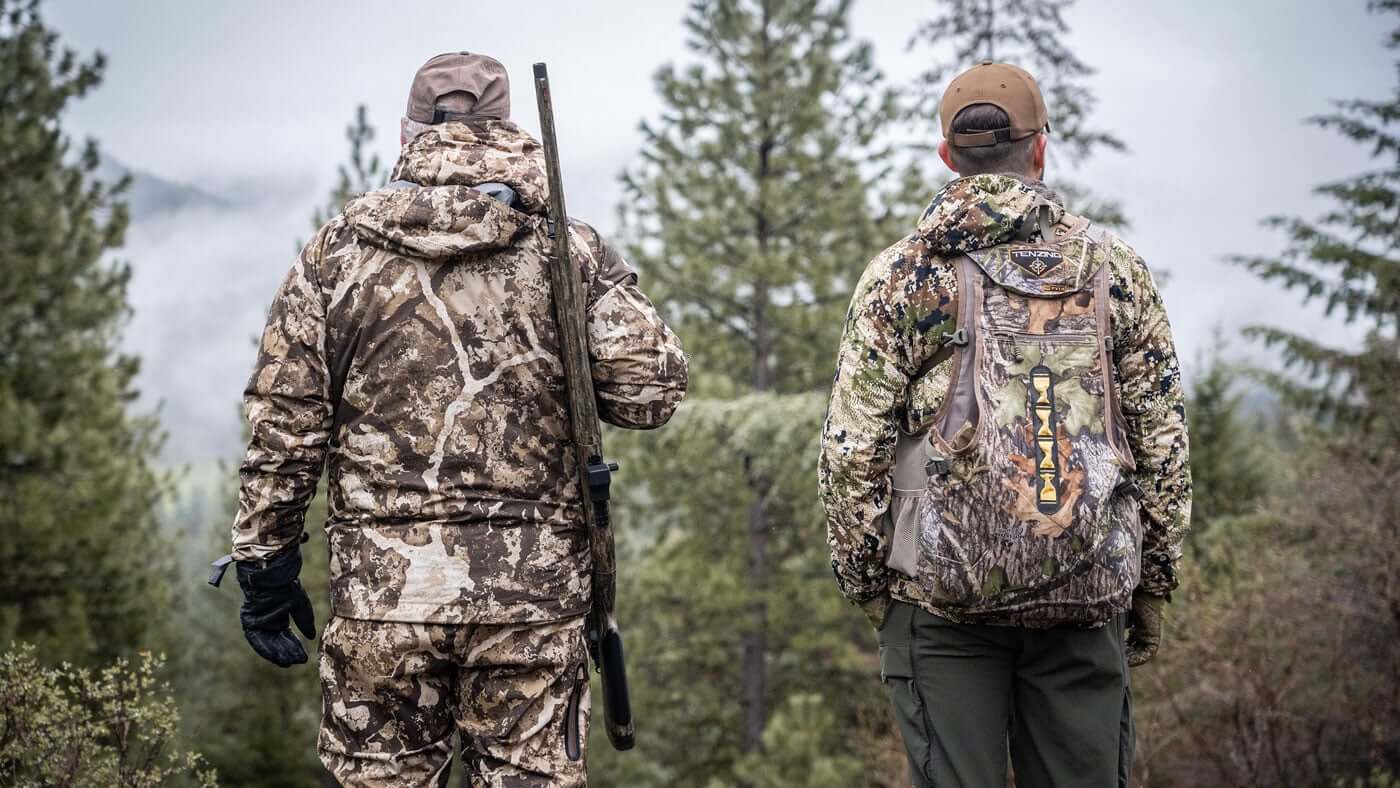
You’ve likely heard tales of your father or grandfather hunting whitetail deer back in the day with a red flannel coat and blue jeans. Well, while that may work for deer and other big game animals, it won’t work out well when hunting turkeys. Turkeys have keen eyesight, being able to pick up easily on subtle movements or patterns that are out of place. Camouflage is a key piece of turkey hunting gear because it helps you blend into your environment and fool even the weariest old gobbler. You’ll want to grab a camo hat, facemask, shirt and jacket, pants, and gloves for full head-to-toe coverage, leaving little to no skin exposed. Some hunters who don’t like facemasks and gloves may opt to use eye black or similar substances on their face and hands instead.
Here are a few tips to consider when picking out camo for the spring woods:
- Match the camo to your environment. If you’re hunting in the early season before the woods have greened up, or you’re hunting out west where vegetation is more scarce, use more brown tones. Once the season progresses, mix more vibrant greens into your camo rotation.
- Have a variety of garments ready. Spring weather is unpredictable, and the last thing you want to be when turkey hunting is uncomfortable and jittery. Layering can be key in the early season, so make sure you have a good base layer, mid layer, and outer jacket to keep the chill off in the early morning. Also, pack some rain gear in your vest! You’ll never know when you might need it.
- Keep insect control in mind. Ticks, mosquitos, gnats, and biting flies are no joke during spring hunts. If you’re in an area where ticks are a concern, consider purchasing camo with insect control barriers built into the fabric. You can also apply products like permethrin to your camo before the season to protect yourself all season long.
Footwear: Finding the Right Boots
A good pair of boots is a key piece of any hunter’s turkey hunting gear. When it comes to boots, there’s no silver bullet out there. The best boot for you hunt will depend on your hunting style, where you hunt at, and your situation. Here are some key factors to consider:
- Terrain: Are you hunting gentle rolling hills? Big timber stands? Rocky cliffs? Soupy swamps? The terrain you find yourself in will matter greatly on what type of boot you use. If you’re hunting in wet areas, like river bottoms or swamps, waterproofing will be an important feature for you. If you’re hunting in dry climates, breathability may be the most important factor.
- Hunting style: If you’re covering several miles a day on large swaths of public land, you’ll want a boot that is comfortable and has good support. In this case, you may want to look for some higher quality boots that will stand up to lots of use in a season. If you’re hunting out of a ground blind on a field edge, you may just opt for a simple rubber or chore boot that you already have lying around.
- Environment: Spring is when the woods come alive, and it’s not just turkeys. If you’re hunting in snake country, consider grabbing a pair of snake boots to help protect yourself against bites.
Calls: Time to Talk Turkey
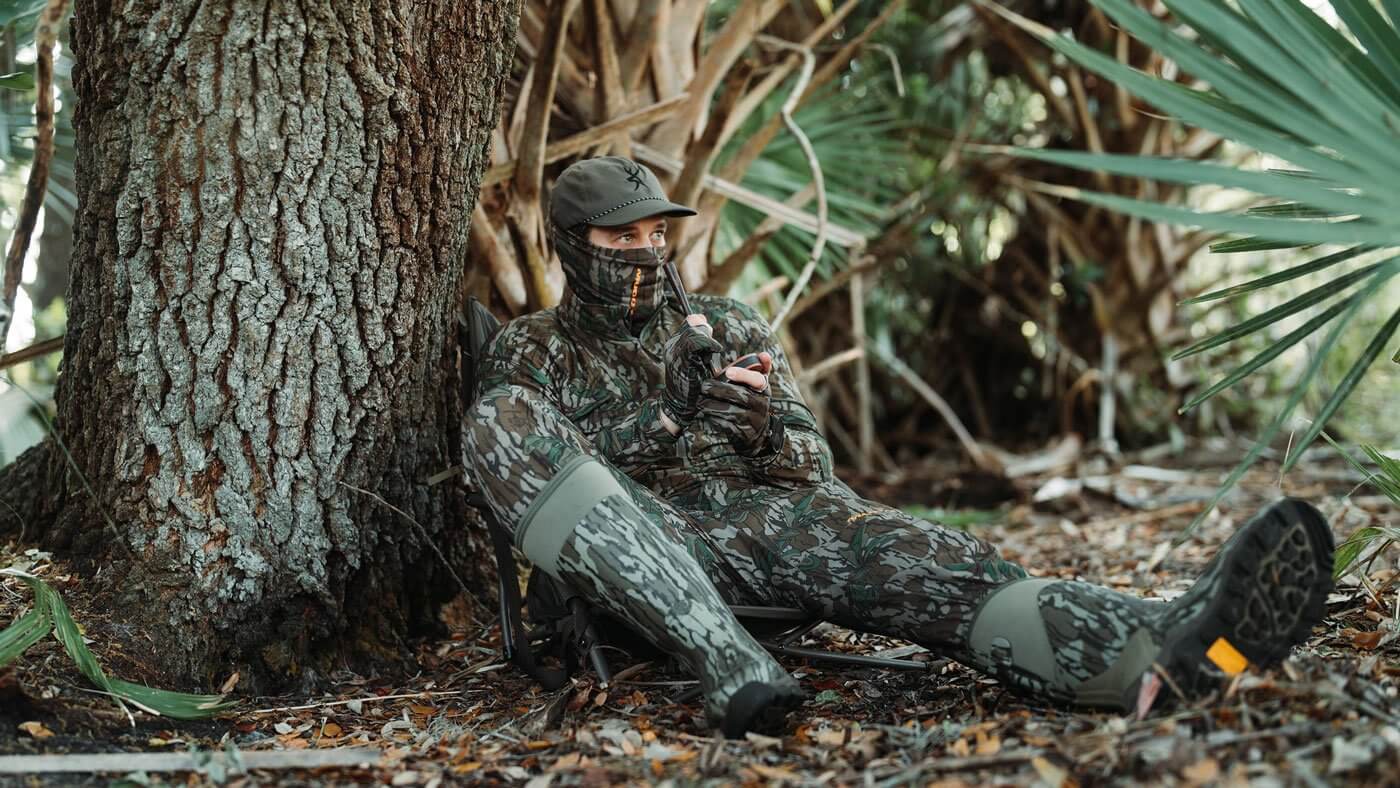
Want to get a gobbler interested in you? Then you’ll need a call or two added to your turkey hunting gear. There are thousands of calls on the market today, and you certainly don’t need all of them to be a successful turkey hunter. But, having a few calls and knowing how to use them well will help you be a more successful hunter when the pressure is on. Here are some of the most common calls used today.
- Box Calls: Box calls are simple, effective, and available in numerous different sizes, sounds, and styles. They’re easy to learn, and can be used from everything to soft calling birds in close to locating far off birds in high winds. The only downside? You’ll need both hands to use them, so pay close attention for birds trying to sneak in before you call.
- Slate/Pot Calls: One of the most versatile calls in the woods, pot calls are easily mastered and call in tens of thousands of birds each year. Materials vary widely, from slate, aluminum, and copper, to glass or crystal, with each having a unique sound. Having a couple of different pot calls and strikers is a good idea to help you mix things up and sound like different birds if you’re hunting the same area frequently.
- Mouth/Diaphragm Calls: These calls are the toughest to master, but also the most realistic. An experienced mouth call user can fool just about any turkey in the woods, and make nearly every turkey vocalization as well. Their also hands free, allowing you to stay on the gun and soft talk that gobbler the last few yards into range.
Like with any skill, practice makes perfect! Make sure you practice your calls before the season starts to keep your skills sharp and learn how to use new calls you may have gotten in the off-season. 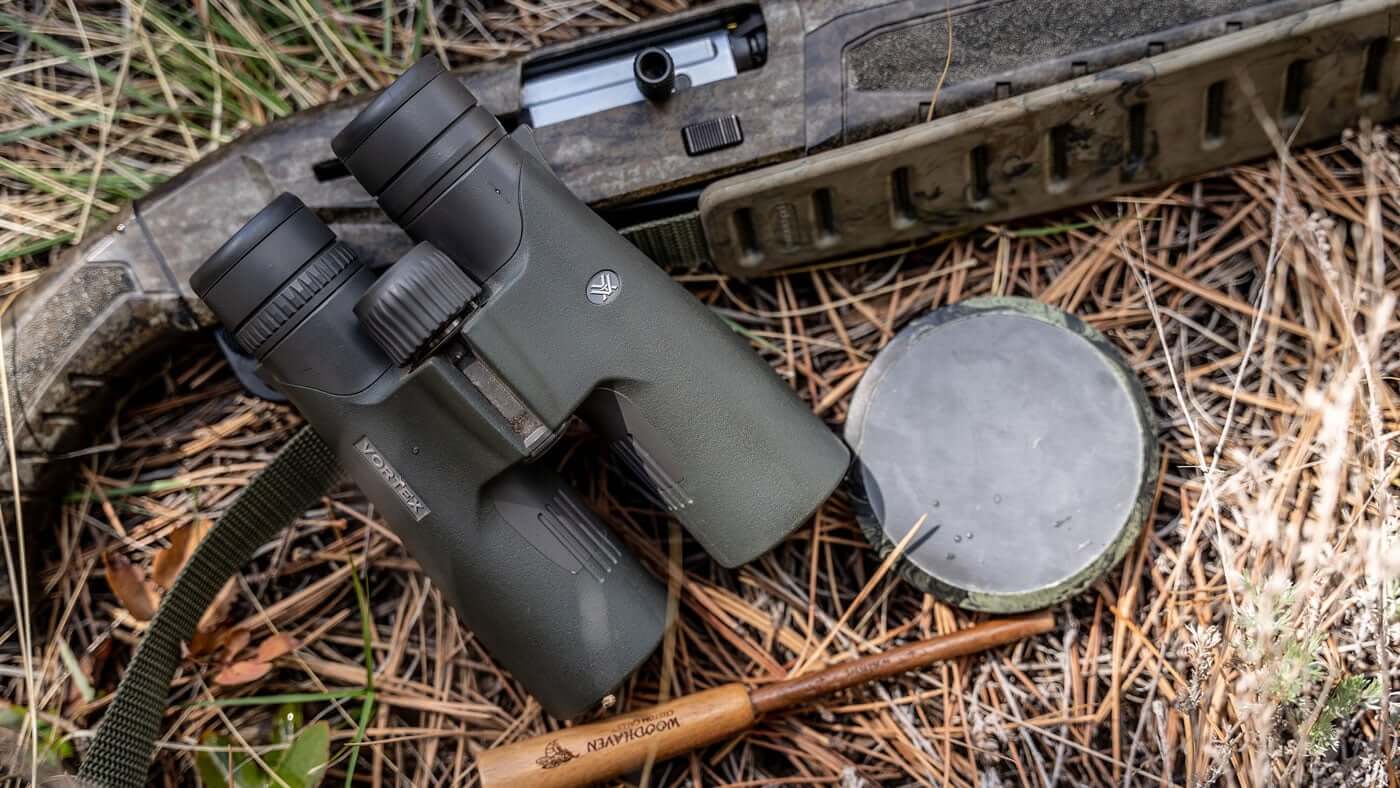
Decoys: Getting a Gobbler’s Attention
Decoys can be a great tool for grabbing a gobbler’s attention, but they’re not a foolproof tool. Having the right decoys and using them at the right time is the key to making them an effective piece of turkey hunting gear.
- Hen decoys help draw gobblers in that are looking to mate. Hen decoys in breeding or lay down positions can be especially effective, or you can include a feeding hen to help show contentment in a flock. Early in the season you can use multiple hen decoys to showcase a flock, or go with a lone hen late in the season.
- Jake decoys enrage an approaching gobbler, who thinks a young hotshot has come in to take his hen. One of the most useful decoy combos is a hen and jake breeding pair, which will often get a gobbler fired up and have him come running into range.
- Strutter decoys can be used in the right situation, but they are limited These decoys that mimic a strutting tom are best used on private land, and when hunting a dominant tom that won’t tolerate a challenge. Younger, subordinate gobblers may be scared off by a strutting decoy.
Decoys aren’t a guaranteed success, and there’s a few areas you should avoid using them. First, be careful using them on public land, especially jake decoys. If you’re hunting public land and using decoys, don’t place them right in front of you. Place them off to the side to reduce any accident potential.
Not every situation calls for a decoy either. While decoys are great for using in open fields, where a gobbler may need a visual display to lock on to and come marching in, they aren’t suited for all situations. When hunting in thick timber, for example, a decoy can cause a gobbler to hang up and wait for hen he sees to come to him instead. 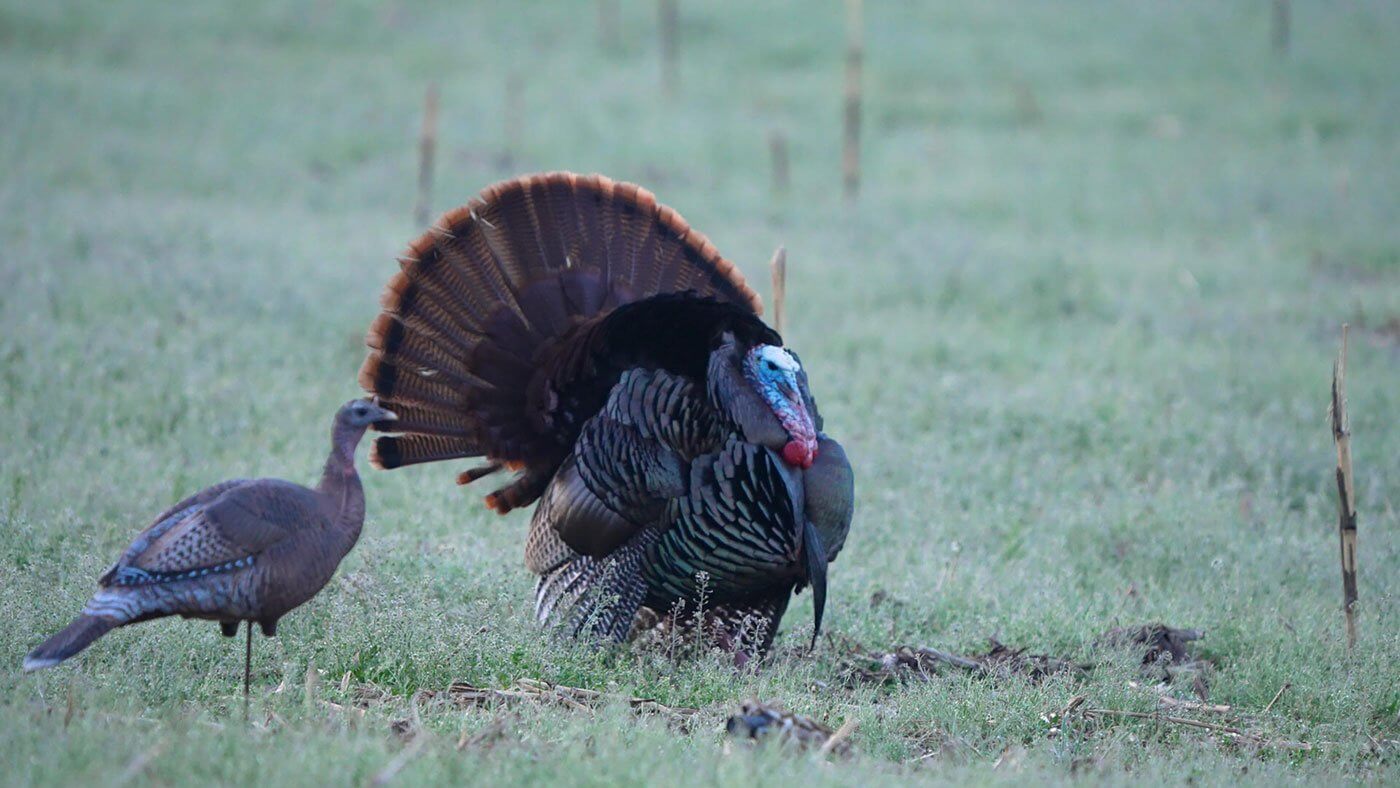
Vests & Packs: Carrying Your Gear
Want to keep your turkey hunting gear organized? You’ll need a turkey vest or backpack! This piece of gear is crucial for keeping the rest of your turkey hunting gear in the right place and getting it all into the field. Here are a few options you can go with.
- Turkey Vests: Turkey vests are purpose built for holding all of your turkey hunting gear. They often feature shot shell pouches, mouth call holders, pot call pouches, box call pouches, and a game bag for carrying out your harvested turkey. Some vests feature pads for sitting on, and even kick stands and frames for use as a seat.
- Backpacks: If you already have a hunting backpack, you can alsoe use it for turkey hunting. They’re useful for carrying decoys, spare jackets, gloves and facemasks, and other gear.
- Chest pack: For the run and gun or minimalist turkey hunter, a chest rig is a great fit. They can hold your binoculars, some calls, shot shells, and a few other necessities that you may need. You can also combine them with your backpack for a setup that works great for hunting all year long, not just turkey hunting!
Ground Blinds: Easy Concealment
If you’re hunting field edges or taking out a new youth hunter, a ground blind offers effective and easy concealment to help you improve your odds for a successful hunt. Here are some reasons why you may opt to use a blind.
- Ground blinds make your hunt more forgiving, allowing you to make some more movement when setting up and getting ready for a shot.
- A quality ground blind keeps you dry and comfortable, as well as concealed. If you're hunting in the rain, a blind is a great place to stay warm and dry.
- Your hunt is more comfortable with a ground blind. You can set up more comfortable chairs, put up a tripod, and help make your hunt more effective.
When you’re planning to hunt from a ground blind, try to get it set up a few days before you plan to hunt to allow any birds in the area time to get use to it. With most ground blinds also having a black interior, a good rule of thumb is to wear black on top instead of camo to blend in better to the background of the blind wall behind you. 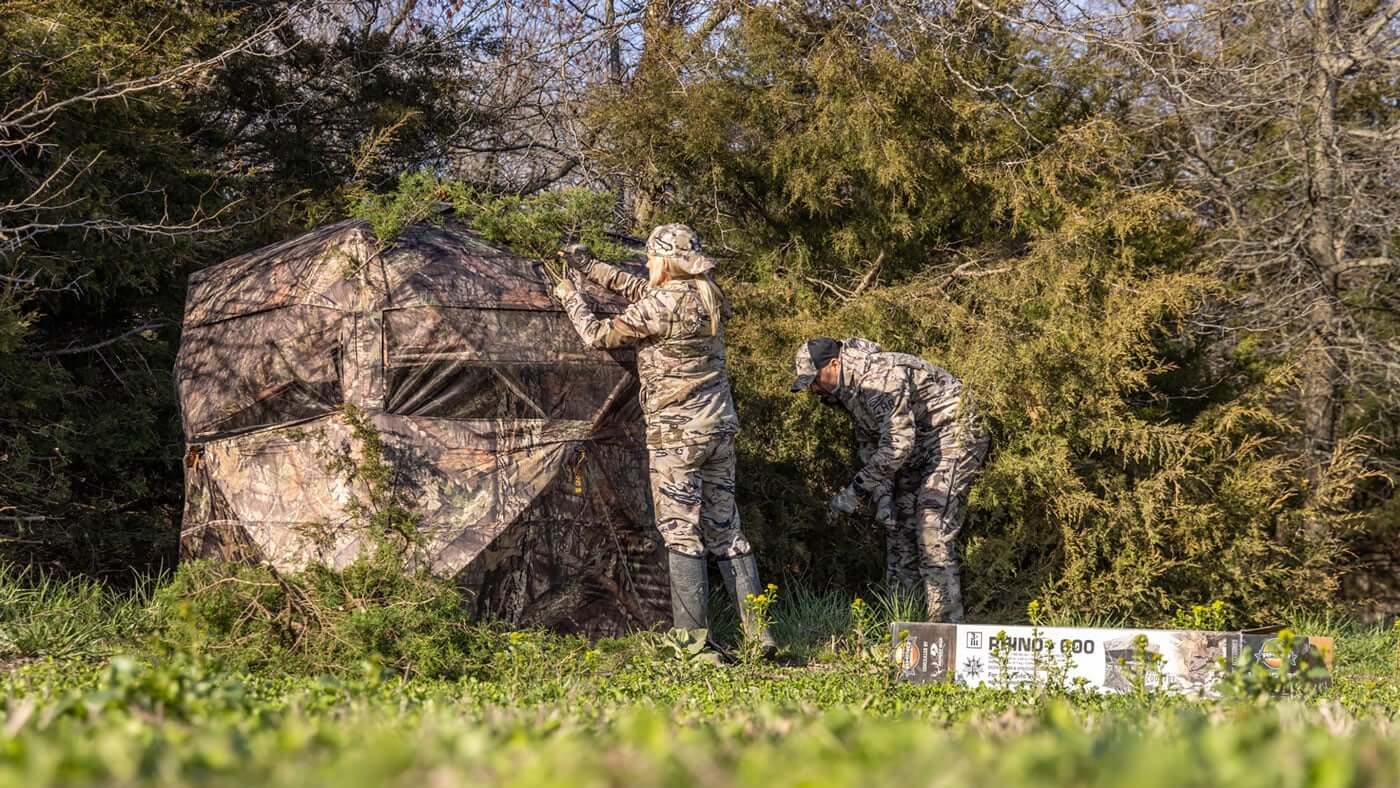
Shotguns & Ammunition: The Most Important Investment
The most important choice you can make in your turkey hunting gear selection is your shotgun and ammunition choices. Luckily, we can help you out with finding the perfect turkey hunting shotgun!
- Model 301 Turkey: The Model 301 is simple, lightweight, and effective. It’s a single shot, break action shotgun that is chambered in 410 bore, 20 gauge, or 12 gauge. The 301 Turkey is perfect for the budget minded turkey hunter, youth hunters just learning the rope, or the hunter that wants a lightweight option for the woods.
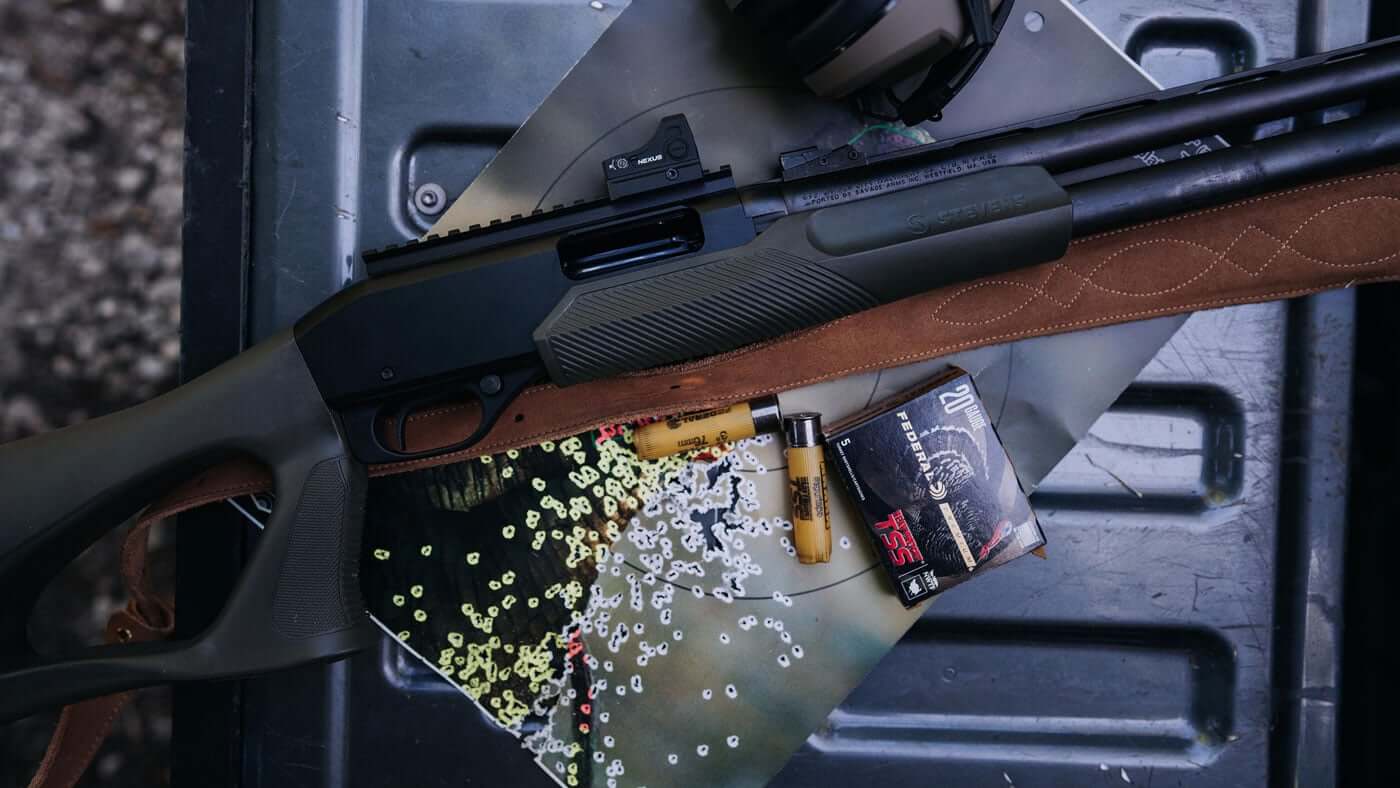
- Model 320 Turkey Thumbhole: The 320 Turkey Thumbhole is a reliable, pump-action shotgun with an ergonomic thumbhole stock and fiber optic front and rear sights. It’s chambered in 20 gauge and 12 gauge and is ready for the turkey woods season after season.
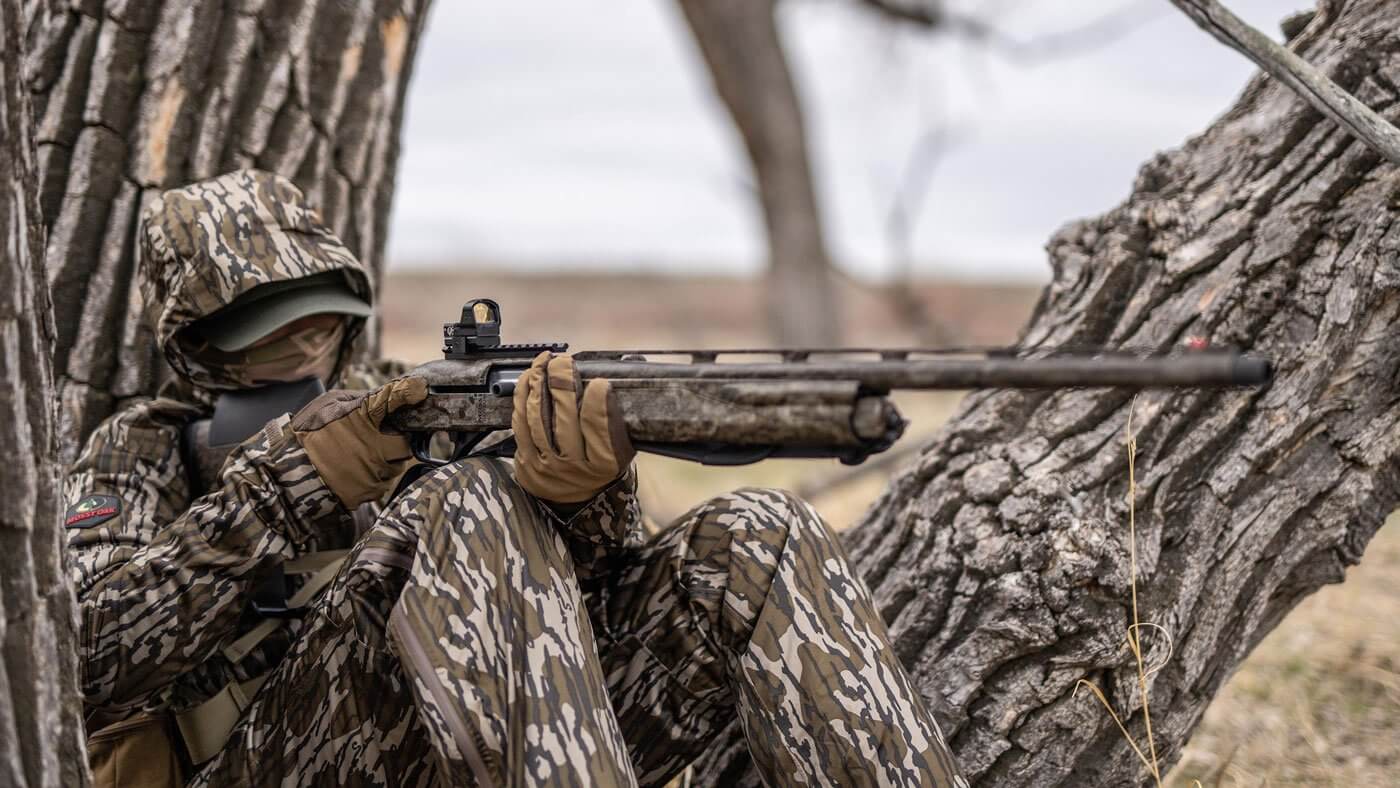
- Renegauge Turkey: Our top-of-the-line turkey shotgun, the Renegauge Turkey puts the hurt on gobblers, not your shoulder. Using our D.R.I.V. gas system, it cycles 12 gauge turkey loads reliably while going light on your shoulder with reduced recoil. The Renegauge Turkey comes in Mossy Oak Bottomland or Obsession camos, so there’s a perfect match for your environment no matter where you’re hunting.
Of course, no turkey shotgun is complete without the ammunition to pair it with. There are two main options on the market today, lead shot and non-toxic shot.
- Lead shot: The standard, and most popular shot for turkey loads. Often loaded in 4, 5, or 6 shot, these are traditionally used out of 12 and 20 gauge shotguns with extra full turkey chokes to get a dense pattern out to and beyond 40 yards. Lead turkey loads are widely available and affordable.
- Non-toxic shot: Non-toxic shot, or non-lead shot, is often made from bismuth, steel, or tungsten. In today’s world of turkey hunting gear, Tungsten Super Shot is the most popular non-toxic option. It’s denser than lead, allowing smaller pellets to be used to create denser patterns at traditional turkey hunting ranges. The use of TSS has also allowed for sub-gauge shotguns, like 410 bore and 28 gauge, to have a resurgence of popularity. Be warned, TSS is quite expensive, but the results on birds are worth it to many hunters in the field.
When it comes to picking the right turkey hunting gear, the choices can seem overwhelming at first. From calls to decoys to shotguns, there’s so many options out there today. When you’re first starting out, try to keep it simple. Find a few pieces of gear to try out, and see what sticks. It’s also a great idea to seek out other turkey hunters you know, and ask if they can take you out on a hunt, or see what gear has worked well for them on previous hunts. You don’t have to spend a fortune to get out and chase spring gobblers. All it takes is a few pieces of gear, persistence, and a willingness to learn a new challenge. Now is the time to start building your gear checklist and get ready for an exciting spring ahead!