- Savage Blog
- Patterning Your Shotgun: Improve Your Shot Before the Season
Patterning Your Shotgun: Improve Your Shot Before the Season
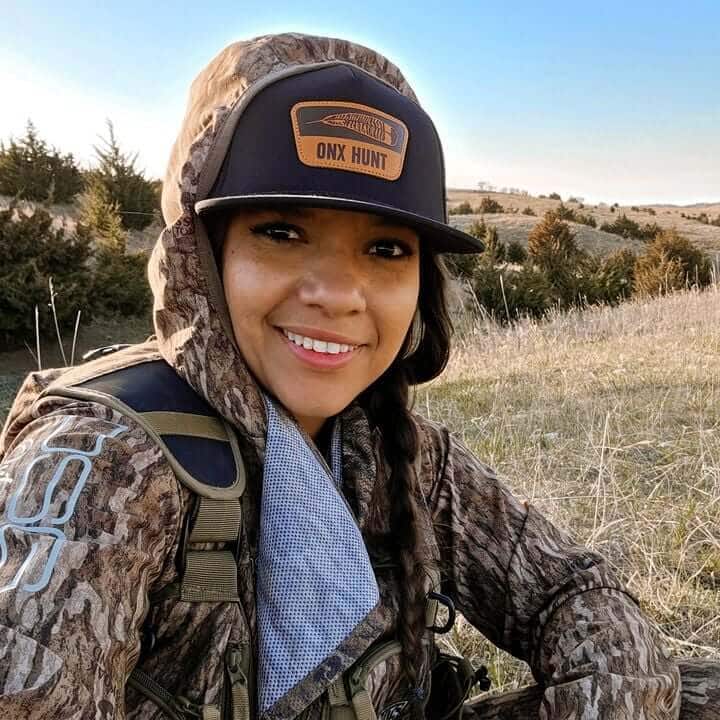
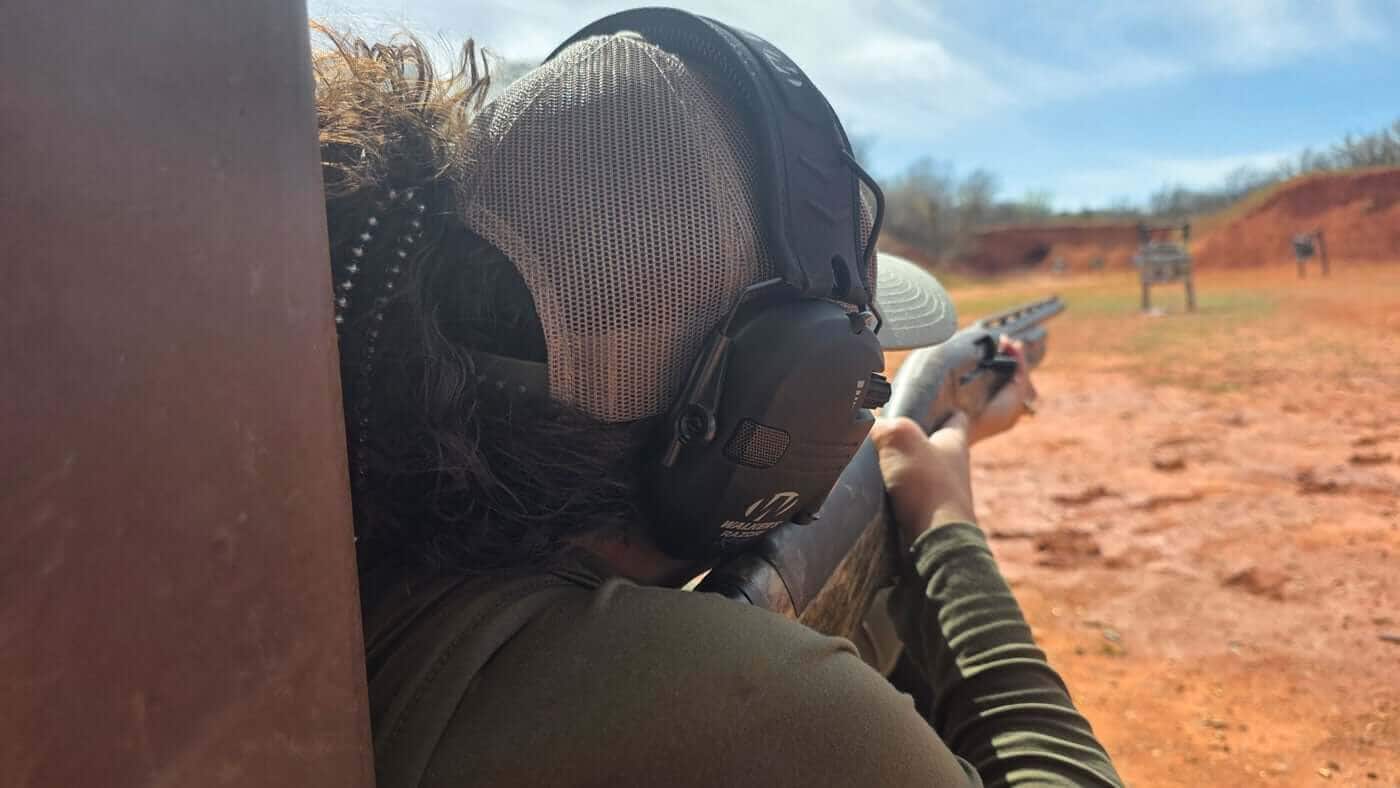
We have heard the stories, and no one wants to be that hunter where the bird comes in perfect, you line up the shot, squeeze the trigger and somehow, you miss. Or worse, you hit the bird, but don’t recover it because the shot was not lethal. It’s frustrating, humbling, and all too common. For many hunters the lack of consistency can create doubt and hesitation every time they shoulder their shotgun. The truth is, it’s often not you, it’s your setup. Patterning your shotgun is one of the most overlooked yet critical steps in becoming a more effective and ethical hunter. Whether you’re chasing spring gobblers, flushing upland birds, or setting up in a duck blind, knowing exactly how your shotgun performs can make all the difference.
What Does “Patterning Your Shotgun” Mean?
Simply put patterning your shotgun means testing how your shotgun shoots, More specifically, how the pellets spread and hit a target at various distances.
Unlike rifles, which fire a single projectile, shotguns fire a cluster of pellets. Once they leave the barrel, those pellets spread out in a pattern. That pattern can vary widely depending on several factors, including your choke, ammunition, and even the specific shotgun you’re using. That means your hunting buddies “perfect setup” might not perform the same for your gun. The only way to truly know how your shotgun performs is to test it yourself. Patterning your shotgun gives you a clear, visual understanding of your shot spread, your point of impact, and your effective range.
Why Patterning Your Shotgun Is Essential
Patterning isn’t just for perfectionists; it’s for anyone who wants to hunt responsibly and effectively. First and foremost, it’s about ethical hunting. A well-patterned shotgun ensures that when you take a shot, you’re delivering enough pellet density to make a clean, humane kill. Poor patterns can lead to wounded animals, lost game and wasted ammo. It also helps you understand your effective range. Just because your shotgun can reach a certain distance doesn’t mean it should. Patterning shows you where your setup performs best and where it starts to fall off.
Additionally, it allows you to match your choke and ammunition to your specific hunting style. Turkey hunting requires tight, dense patterns at longer ranges, while upland hunting often benefits from a wider spread at closer distances.
Finally, patterning builds confidence. When you know exactly how your shotgun performs, you eliminate guesswork. That confidence translates directly into better shooting and more success in the field.
What You’ll Need to Pattern Your Shotgun
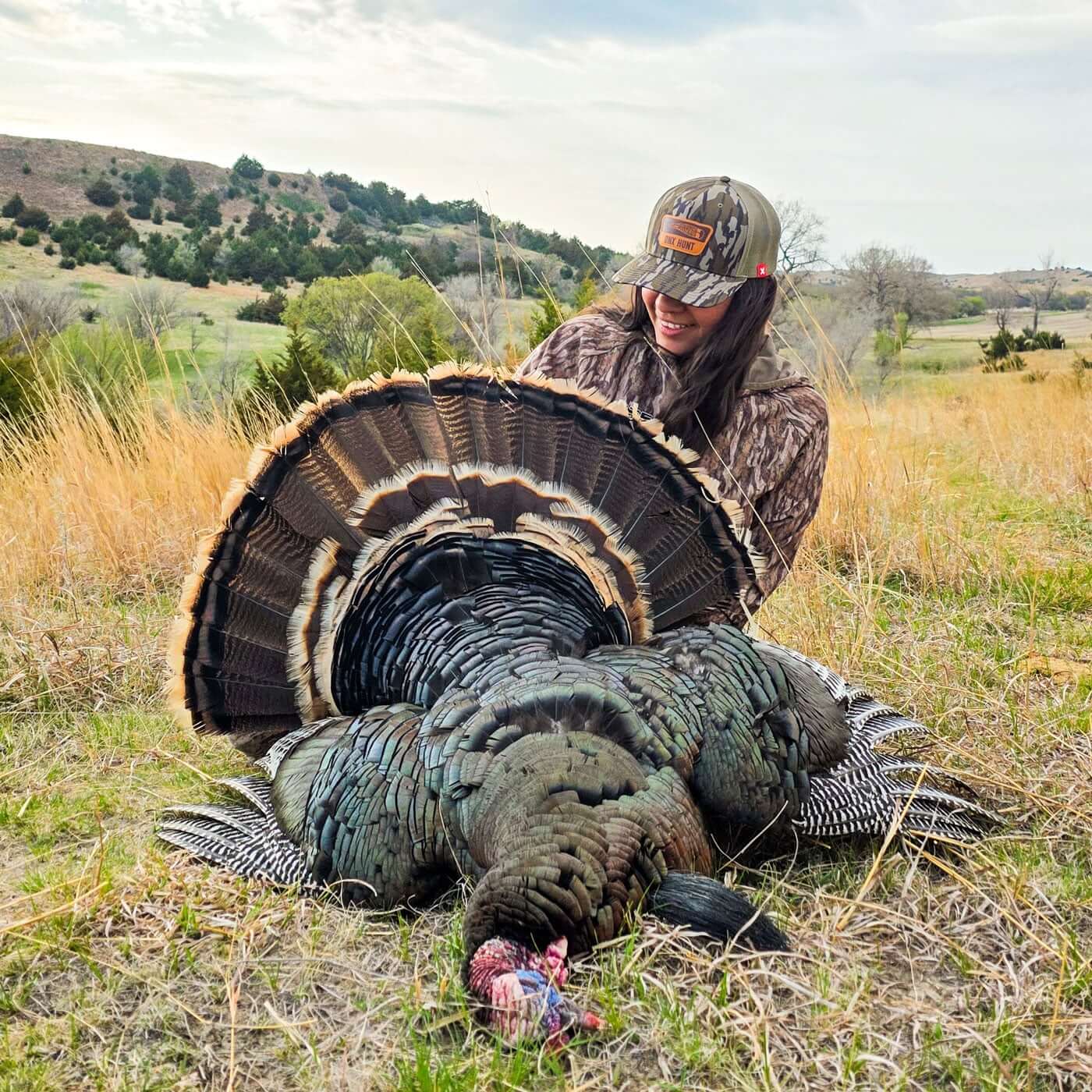
Getting started doesn’t require anything complicated, but having the right setup makes a big difference. You’ll need your shotgun, I shoot the Savage Renegauge for turkey, along with a variety of ammunition to test. Different loads can produce dramatically different results, even in the same gun.
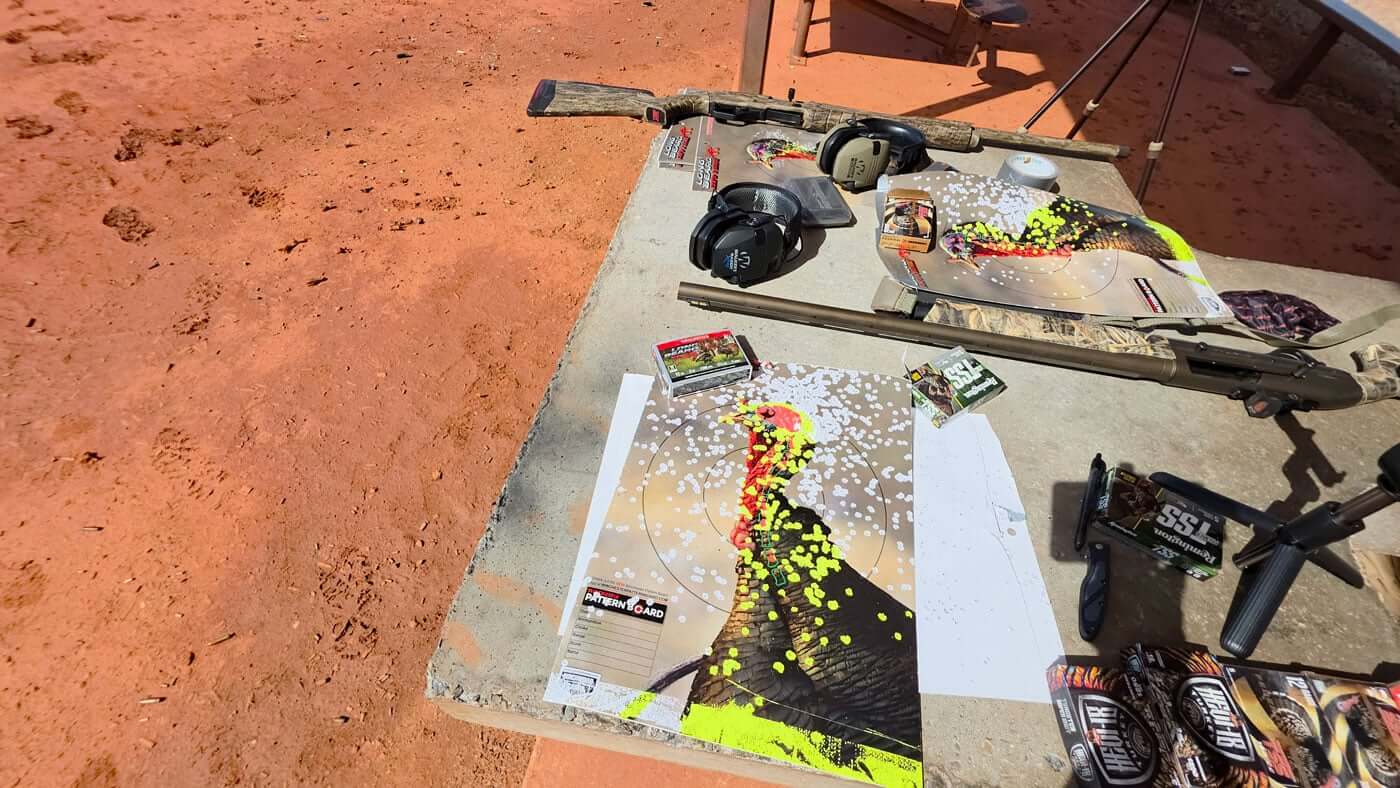
Bring multiple chokes, such as full, modified, or specialized turkey chokes, so you can compare performance. The Renegauge includes Extended Turkey, Full, Improved Cylinder, and Modified choke tubes (Beretta/Benelli Mobil). You’ll also need large patterning targets, paper or cardboard at least 30 to 40 inches in size. I personally like the neon splatter targets; they take the guess work out. A rangefinder is essential for setting accurate distances, and a marker will help you analyze your results. Finally, use a stable shooting rest like a bench, sandbags, or a tripod. For me I typically hunt turkeys from the ground sitting against a tree. So, I like to practice shooting from the ground.
Step-by-Step: How to Pattern Your Shotgun
1. Set Your Distance
Start by measuring out realistic hunting distances. For turkey hunting, common distances are 20, 30, and 40 yards. For waterfowl or upland hunting, you might focus on 25 to 40 yards. Beginning at 20 yards is important, it gives you a baseline and helps you confirm your point of impact before moving farther out.
2. Set Up Your Target
Use a large target so you can clearly see the full spread of your shot. Place a small, defined aiming point in the center, such as a dot or a turkey head silhouette. This gives you a consistent reference point for every shot.
3. Take the Shot
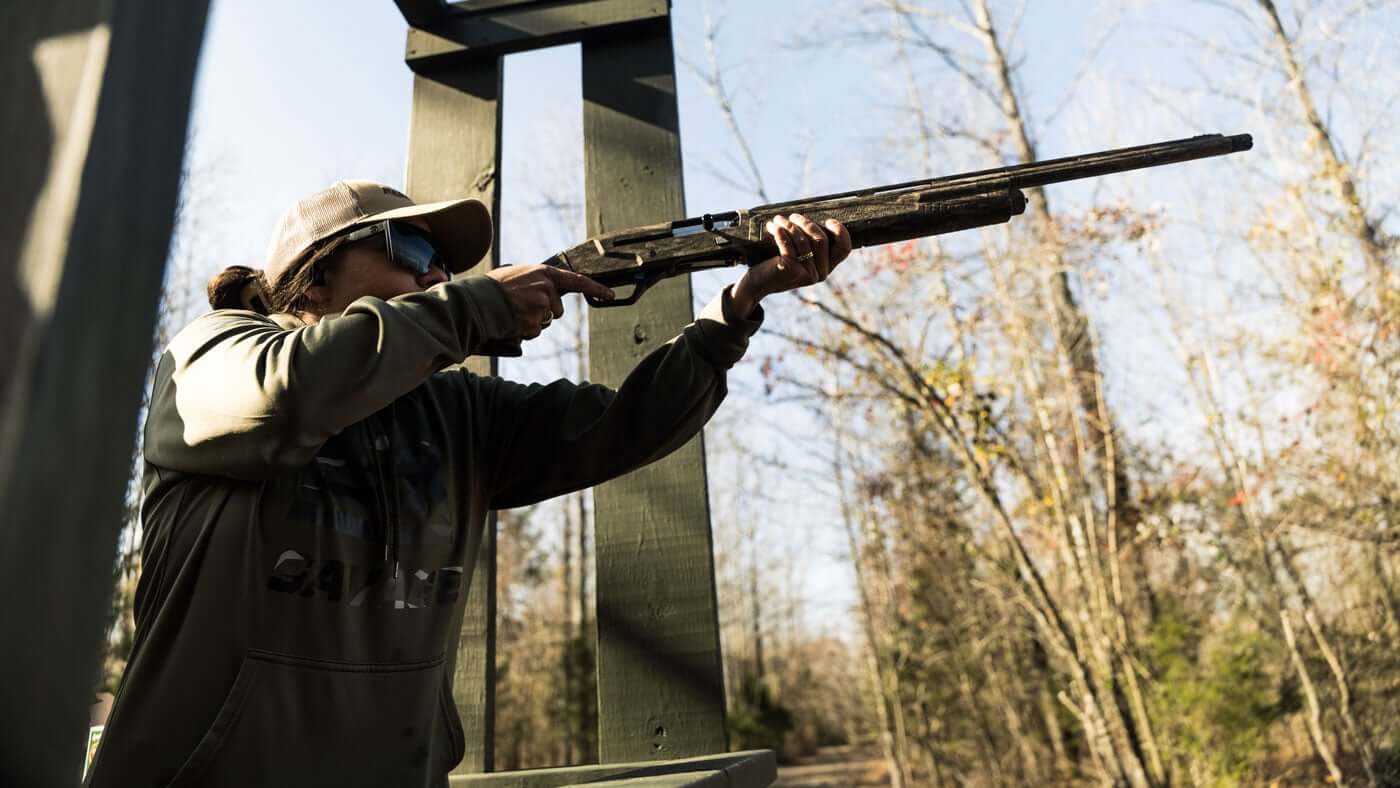
From a stable rest, take one carefully aimed shot at the target. Focus on consistency, same aim, same process. Avoid the temptation to shoot multiple times at the same target. One shot per target gives you a clean, accurate picture of your pattern.
4. Analyze the Pattern
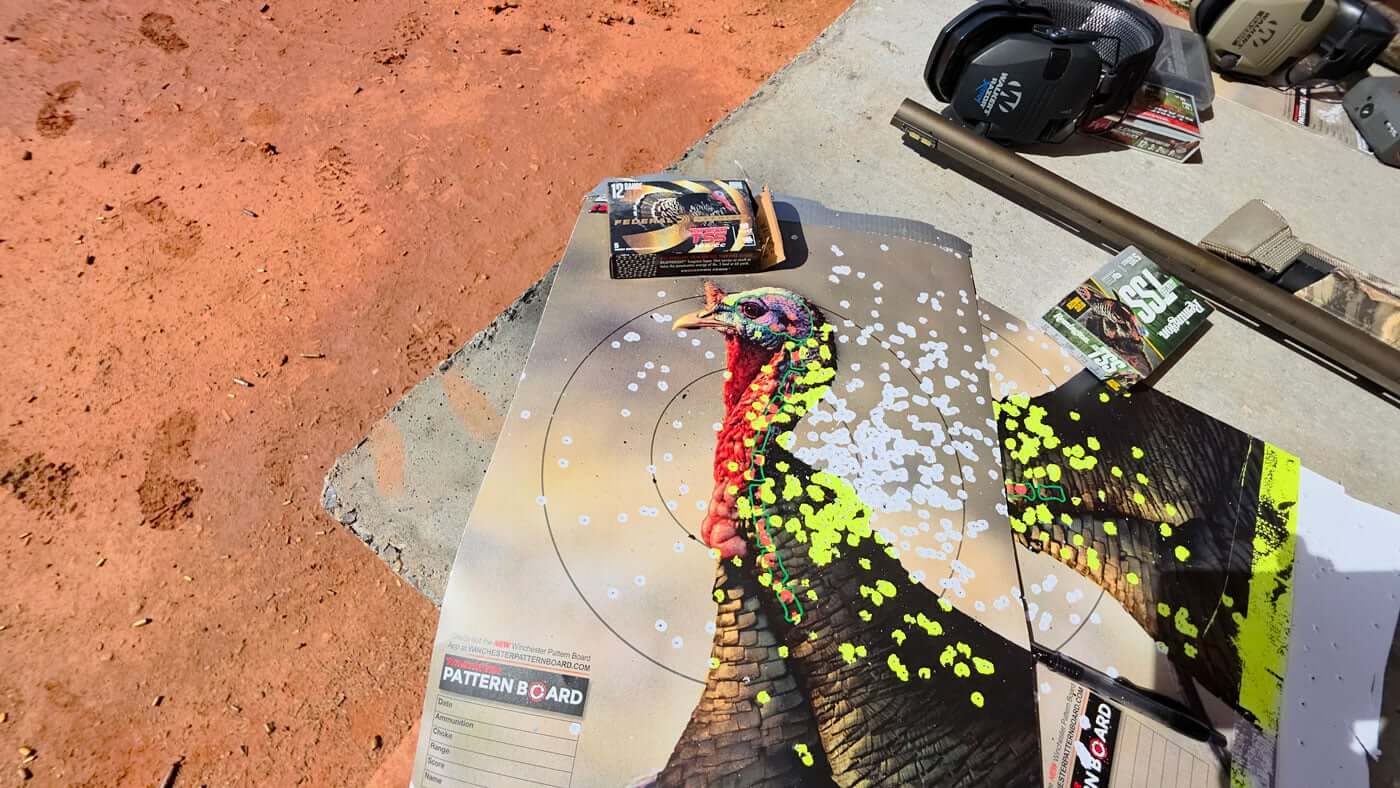
Now comes the most important part, reading your results. Draw a 10-inch circle around the densest portion of the pattern (especially for turkey hunting). Count the number of pellet hits within that circle. Look for even distribution across the circle. Are there gaps or holes where a bird could slip through? Also pay attention to where the pattern is centered. Is it hitting exactly where you aimed, or is it high, low, left, or right?
5. Adjust and Repeat
This is where patterning becomes a process. Try different choke and ammunition combinations and repeat the test at various distances. Keeping notes so you can compare results.
Over time, you’ll identify the setup that gives you the best performance for your specific hunting needs.
Understanding Chokes and Loads
Your choke and ammunition work together to determine your pattern. Chokes control how tightly the shot stays together as it leaves the barrel. Simply put a tighter choke, like a full or turkey choke, produces a denser pattern for longer-range shooting. More open chokes, like improved cylinder, create a wider spread for closer shots.
Ammunition also plays a major role. Lead, steel, and TSS (tungsten super shot) all behave differently. Shot size affects pellet count and energy, while velocity influences how the pattern forms and performs downrange. Some combinations will perform exceptionally well in your shotgun, while others won’t. Patterning is how you find that perfect match. Rushing the process can lead to poor conclusions. Take your time, stay consistent, and let the data guide your decisions.
How to Find Your Effective Range
Your effective range is the maximum distance at which your shotgun can consistently deliver an ethical shot. For turkey hunting, an ideal common benchmark is around 100 or more pellet hits within a 10-inch circle. If your pattern falls below that threshold at a certain distance, that’s likely beyond your set-ups ethical range. The key takeaway is this: just because your shotgun can reach a target doesn’t mean it should. Patterning helps you define your personal limit, and stick to it.
Real-World Application in the Field
Once you’ve patterned your shotgun, everything changes in the field.
You’ll know exactly what your setup is capable of, and that confidence allows you to focus on the hunt instead of second-guessing your shot. When a bird steps into range, you’ll recognize the moment and take the shot with certainty.
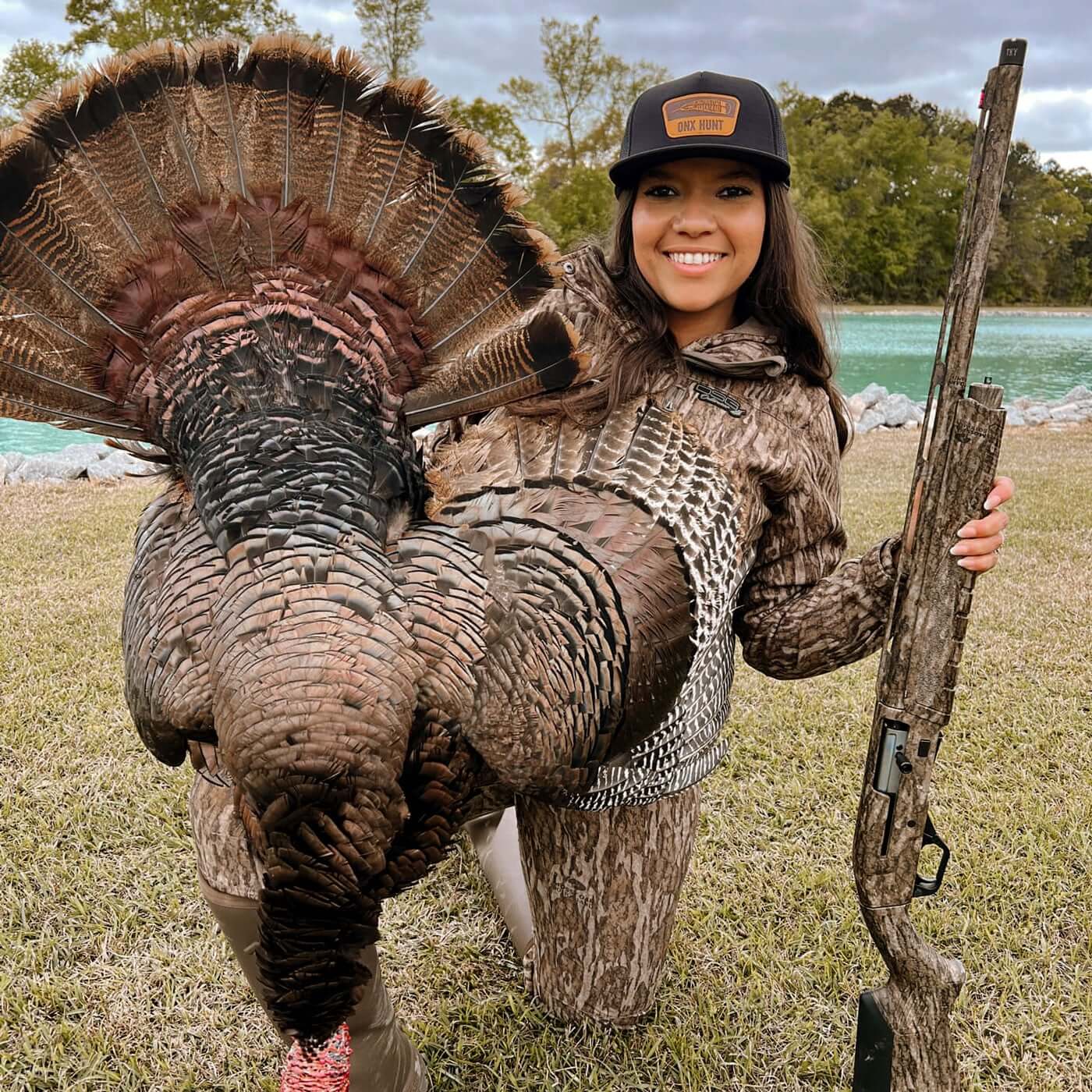
Patterning your shotgun also helps you adapt to real-world variables like movement, angles, and environmental conditions. “Practice how you play” and you’re no longer guessing. You will be applying proven knowledge.