- Savage Blog
- How to Prepare for Competitive Rimfire Shooting
How to Prepare for Competitive Rimfire Shooting

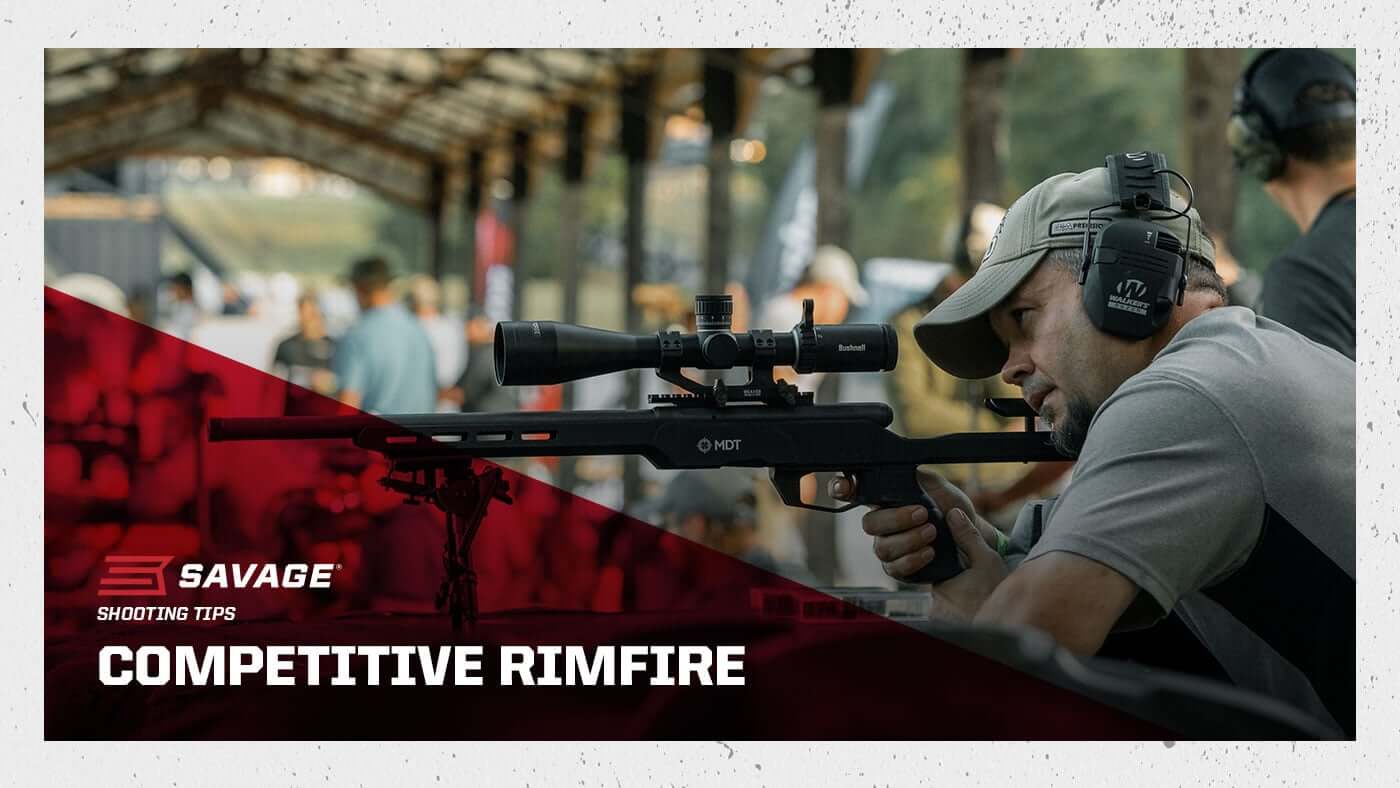
There's a reason competitive rimfire shooting has exploded in popularity over the last several years. It's affordable, it's accessible, and it rewards the exact same fundamentals that make a great long-range centerfire shooter, just at a fraction of the cost per round. If you've been thinking about stepping up to your first match, we've put together everything you need to walk in prepared and walk out wanting to come back for more.
The Gear You Need
Let's start with the first question: what do you actually need to compete?
Rifle
Your rifle doesn't need to be the most expensive thing on the line, but it does need to be accurate and consistent. We'll break this down into three tiers:
- Good - B Series Precision: An excellent entry point into competitive rimfire shooting, the B Series Precision pairs an MDT chassis with a heavy threaded barrel, plus adjustable length of pull and comb height so you can dial in your fit right out of the box.
- Better -110 RF Core Tactical: Built on the legendary 110 action scaled down for 22 LR, the Core Tactical brings full-size rifle feel to a rimfire platform. It features an AccuFit V2 stock with a toolless Quick Set Dial, a match-grade chamber, and an interchangeable bolt baffle that lets you switch bolt throw length between a quick 22 LR stroke and a full .308-length stroke, handy feature if you're also using it to train for centerfire competition.
- Best - 110 RF Elite Precision: Savage's most accurate full-size rimfire rifle to date, the Elite Precision is built with an MDT ACC Gen 2 Premier chassis and a Competition AccuTrigger for a smooth, crisp break shot after shot. This is the rifle for shooters who are serious about squeezing every bit of accuracy out of competitive rimfire shooting.
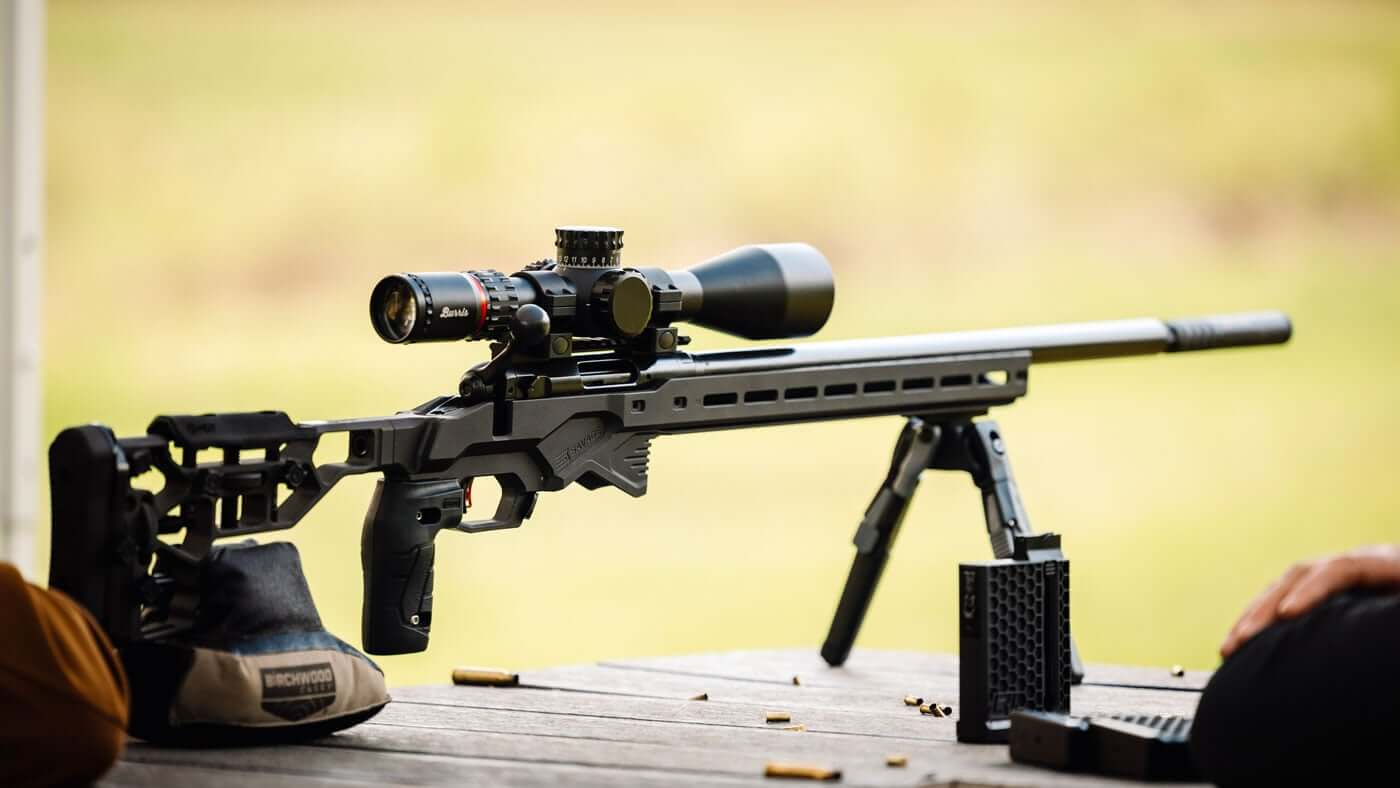
Optics
Your scope needs to match the demands of the game. Consider:
- Magnification level: You need enough magnification to clearly identify small targets at distance without sacrificing field of view up close.
- FFP or SFP: A first focal plane (FFP) scope keeps your reticle sub tensions accurate at any magnification, which matters if you're holding for wind or drop rather than dialing. A second focal plane (SFP) scope is often more affordable but only reads true at max magnification.
- Adjustable turrets: Need to be precise and repeatable to let you dial corrections quickly and confidently between stages.
You'll also want either binoculars or a spotting scope with as large an objective lens as practical. More glass means more light, and more light means it's easier to spot your own hits and misses and get your corrections dialed quickly.
Ammunition
Good quality 22 LR ammo makes a bigger difference than most new shooters expect. Look for a load that produces consistent, reliable groups at 50 to 100+ yards in your specific rifle. Rimfire ammo is notoriously particular about what a given barrel likes, so testing a few options before a match pays off.
Other essentials
Round out your kit with a bipod, a handful of magazines so you're not fumbling to reload mid-stage, and eye and ear protection that meets range requirements. A few extras that make life easier once you're hooked: a shooting mat, a rangefinder, a D.O.P.E. (Data On Previous Engagement) chart to track your holdovers at various distances, a weather meter, a ballistics calculator, and a rear support bag for added stability in positions that don't allow a bipod.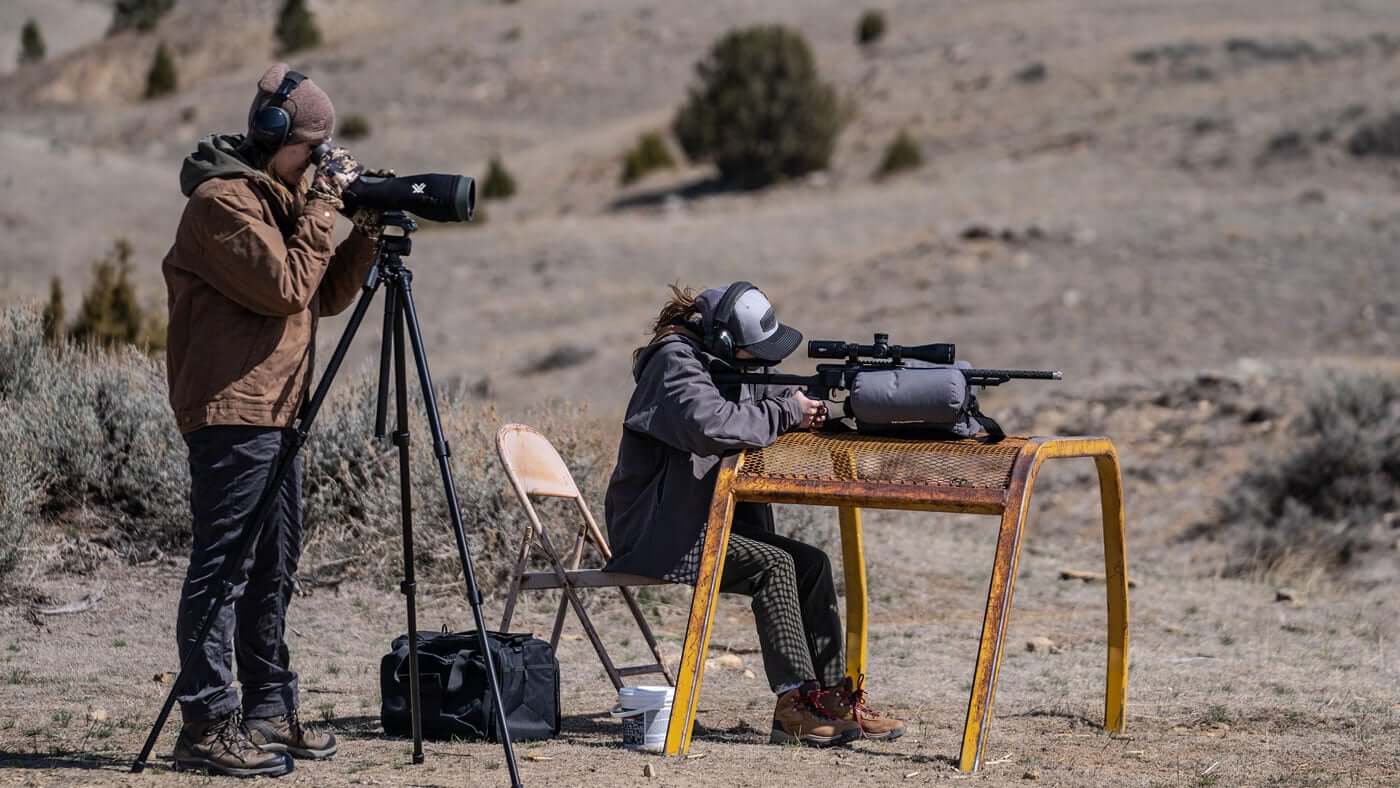
Nailing the Fundamentals
Gear only gets you so far. Success in competitive rimfire shooting comes down to fundamentals, and there are three that matter more than anything else.
Breath control
Controlling your breathing helps control your stability. Your body naturally moves as you breathe, and that movement translates directly to the muzzle. Learning to find a natural pause in your breathing cycle, and breaking the shot during that pause, leads to better, more consistent hits.
Trigger squeeze
Jerking the trigger can alter shot placement and impact accuracy more than almost any other mistake a new shooter makes. A good, slow, straight-back squeeze ensures your rifle moves as little as possible as the shot breaks, keeping your sight picture true through follow-through.
Head placement
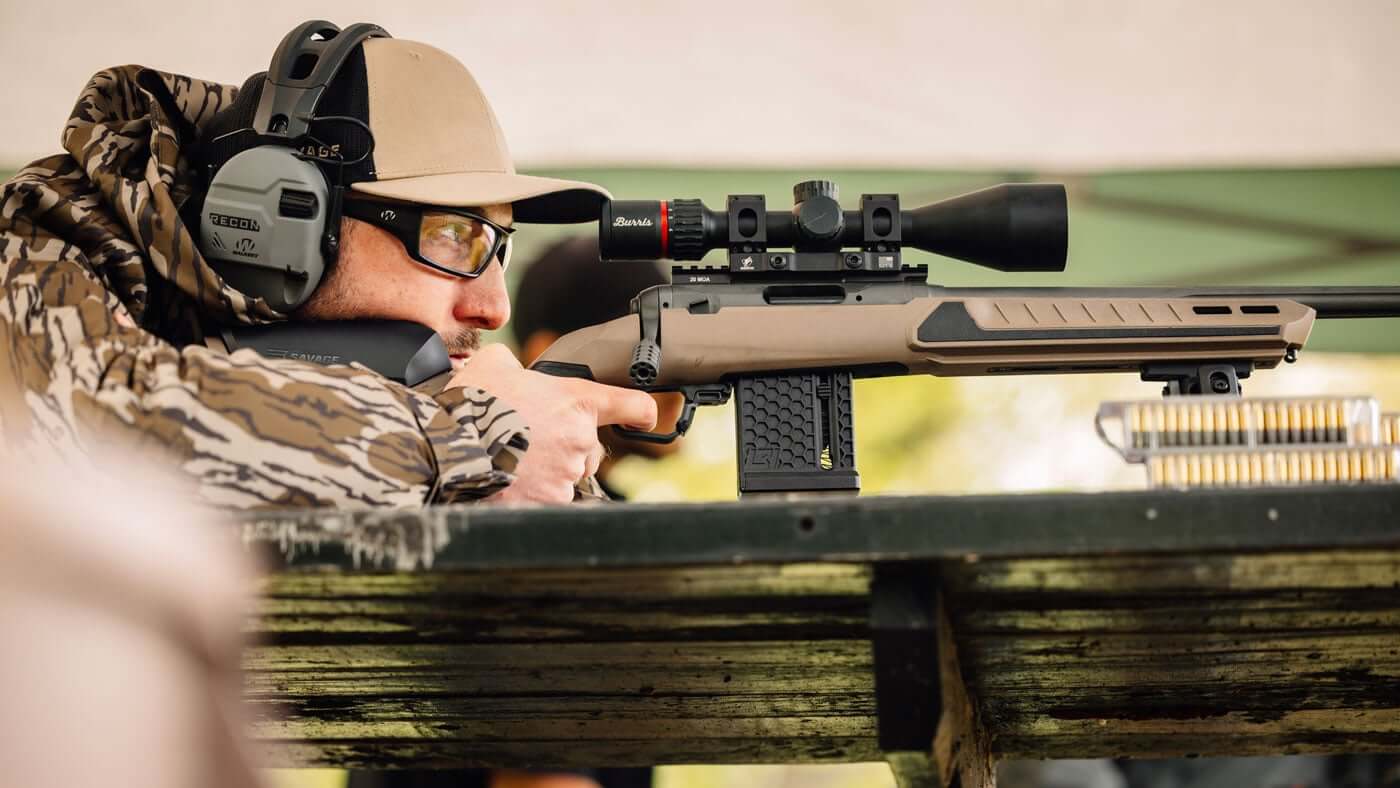
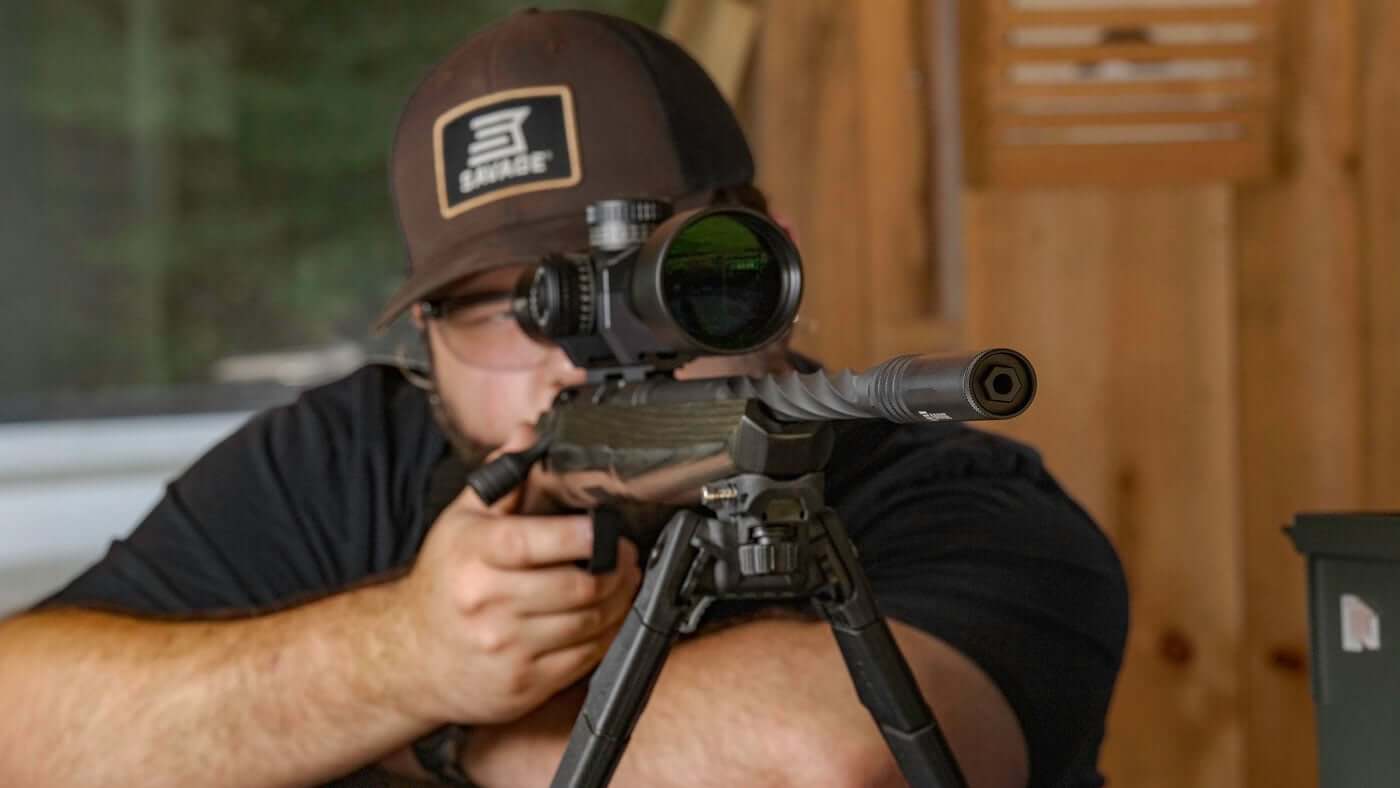
Solid head placement and a good cheek weld are essential for a proper sight picture. Even small head movement changes your view of the reticle, which can throw off your point of aim without you even realizing it. Building a consistent, repeatable cheek weld every time you get behind the rifle is one of the simplest ways to tighten up your groups.
Positional Practice
One of the biggest differences between casual plinking and competitive rimfire shooting is position. Matches routinely require shooting from multiple positions, often within the same stage, and each one comes with its own set of challenges.
Make sure you're practicing:
- Standing: The least stable position, demanding the most body control.
- Kneeling: A middle ground that still requires balance and a solid base.
- Prone: Typically, the most stable position, but not always available depending on the stage.
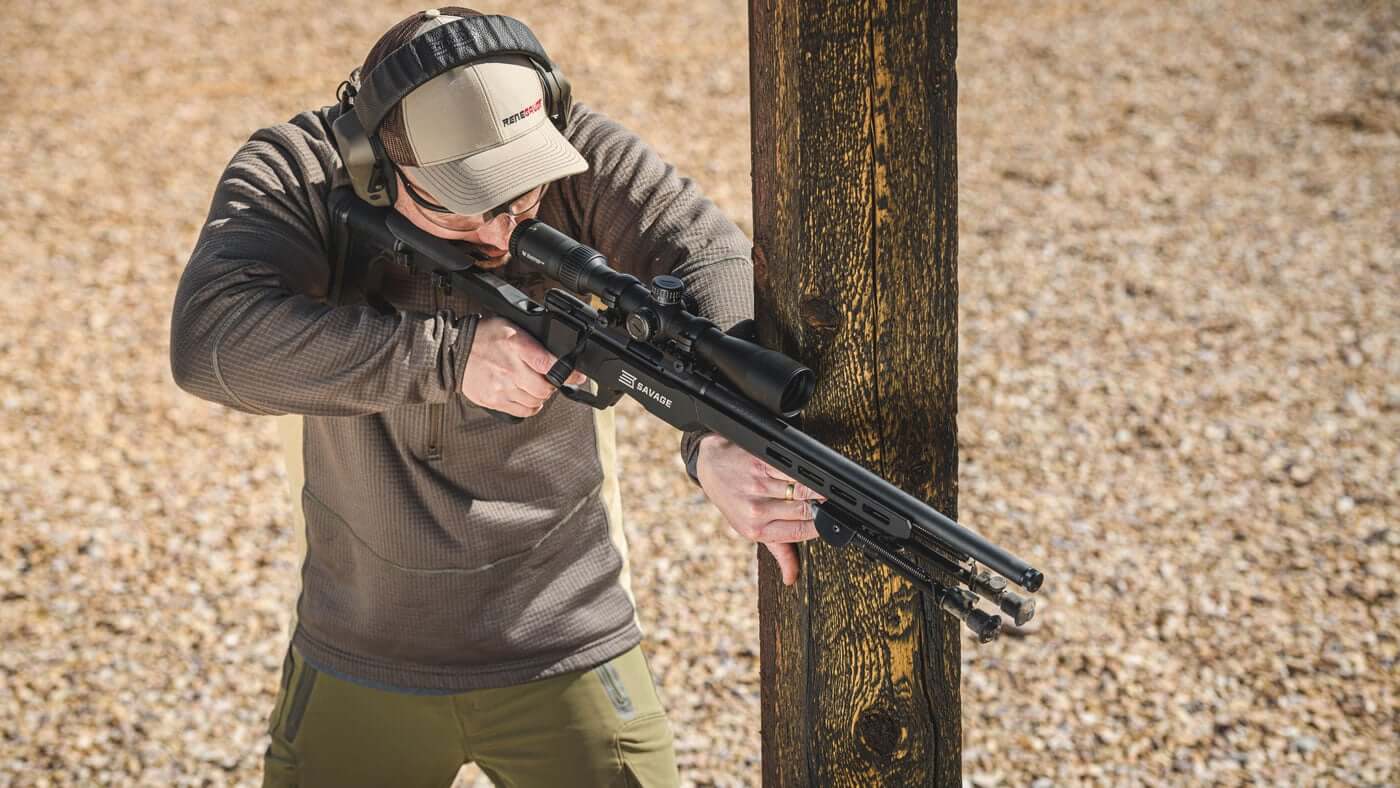
- Barricade: Shooting around or over an obstacle, which forces you to adapt your position to available support.
Don't just practice these positions once and call it done. Work through them at different distances and in varying conditions, from wind, to low light, to uneven ground, so nothing you encounter on match day catches you off guard.
Putting It All Together
At the end of the day, getting ready for competitive rimfire shooting comes down to three things: get quality gear, practice with it, and refine your skills before you ever step up to the line at a real match.
Once you feel ready, use your early competitions as a learning tool rather than a measuring stick. Pay attention to how more experienced shooters set up their positions, manage their time, and call their wind. There's no better classroom than standing next to someone who's been doing this for years.
Most importantly, have fun at the range. Competitive rimfire shooting is one of the most welcoming, affordable ways to sharpen your skills as a shooter, and every match is a chance to walk away a little better than you showed up.